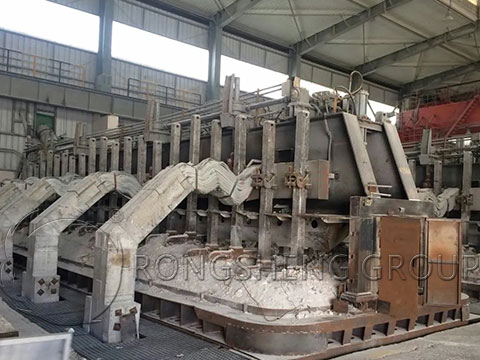
Current analyses of the damage mechanisms of refractory materials in copper smelting primarily focus on furnace types such as smelting furnaces, converters, and anode furnaces in the pyrometallurgical copper refining process. Copper concentrate is smelted in a smelting furnace to produce copper matte, which is then blown into blister copper in a converter/blowing furnace. The blister copper is refined into anode copper in an anode furnace, and the anode copper is further refined into refined copper through electrolytic refining. The copper smelting process is characterized by intense chemical reactions, high speed, high thermal intensity, and complex furnace atmospheres (O2 and SO2), making the furnace lining refractory materials susceptible to erosion. Magnesia-chromium refractories, due to their excellent resistance to slag erosion, are commonly used as lining materials in pyrometallurgy for copper smelting. To date, magnesia-chromium refractories remain considered the most suitable refractory materials for copper smelting.
NGL refining furnaces are of great significance for the recycling of scrap copper and can alleviate the shortage of copper concentrate resources. However, the scrap copper in the NGL refining furnace contains excessive impurities (including metallic elements such as Pb, Zn, As, Ni, and Fe) and requires repeated oxidation and slag formation, resulting in harsh service environments for the furnace lining refractory materials. This study analyzes the macroscopic morphology, phase composition, and microstructure of magnesia-chrome bricks used in NGL furnaces to reveal the damage mechanism of these bricks. This aims to provide more scientific evidence for the development and application of refractory materials in copper smelting.
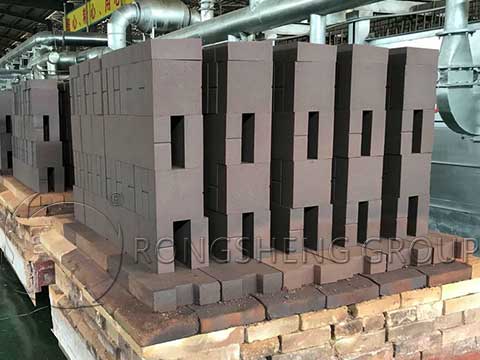
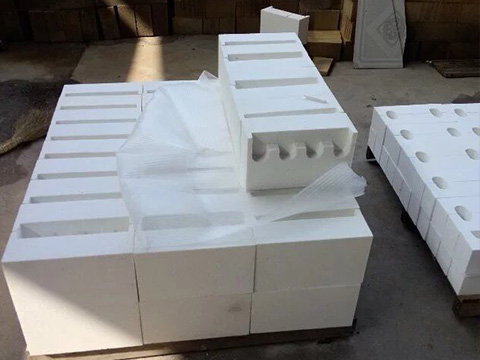
Magnesia Chrome Brick from Rongsheng
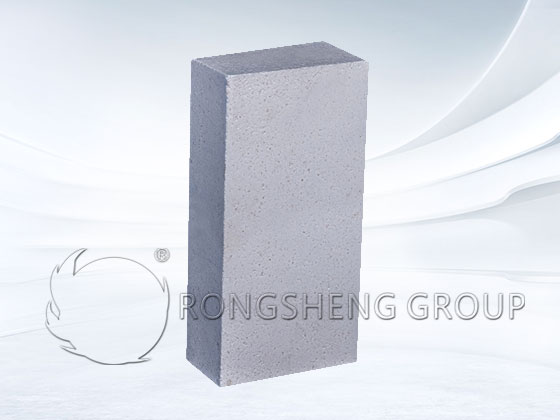
Magnesia-Chrome Refractory Material for NGL Furnace
Used magnesia-chrome bricks from an NGL furnace in a copper plant were selected for erosion behavior and mechanism analysis. The horizontal cross-section of the remaining bricks was divided into different zones according to the degree of erosion: a slag-reaction layer, a penetration layer, and a layer resembling the original brick.
The phase composition and microstructure of the original brick layer of the used magnesia-chrome bricks are visible. The aggregate mainly consists of fused magnesia-chrome frit and magnesia particles, while the matrix mainly consists of periclase and chromite spinel. Porosity in the matrix is obvious, but the bonding between adjacent grains (perclase-perclase and periclase-chromite spinel) remains at a relatively high level. The cold surface phases of the remaining bricks are periclase and chromite spinel (Mg, Fe)(Cr, Al, Fe)₂O₄, with a small amount of CaSO₄ phase.
During copper smelting, sulfides oxidize to form gaseous SO₂, which then migrates into the refractory bricks. As the temperature drops below 1050 °C, the sulfur oxides, converted from SO2 to SO3, react with oxides in magnesia-chrome bricks. This generates low-melting-point alkaline earth metal sulfides, primarily composed of MgSO4 and CaSO4, leading to changes in the composition of the magnesia-chrome refractory.
Secondly, SO2–O2 gas diffuses into the quasi-original brick layer on the cold surface of the remaining bricks. Due to the dissociation of calcium magnesium olivine at the grain boundaries, SO2/SO3 in the gaseous medium reacts with CaO in the brick to form CaSO4. Analysis confirms the presence of the CaSO4 phase in the reaction layer on the cold surface of the remaining bricks. When the oxygen partial pressure is 10–9 ~ 10–5 MPa, the SO2 partial pressure is 0.01 ~ 0.10 MPa, and the melting temperature is 1200 °C, the formation temperature of magnesium sulfate is 700 ~ 800 °C. MgO reacts with SO2 in the gas to form MgSO4, and this reaction causes volume expansion. As the furnace lining temperature decreases, the MgSO4 formed on the cold surface of the refractory material decomposes into MgO. MgSO4 has a low density of only 2.66 g/cm³, while MgO has a density of 3.58 g/cm³. Therefore, the MgO structure formed from the decomposition of MgSO4 is relatively loose.
Ultimately, this makes the magnesia-chromium refractory material in this area more susceptible to erosion by slag and other media.
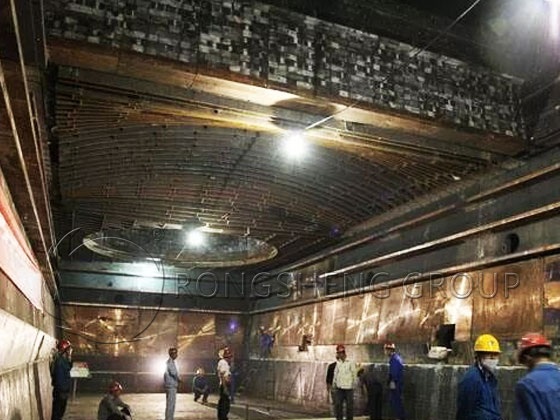
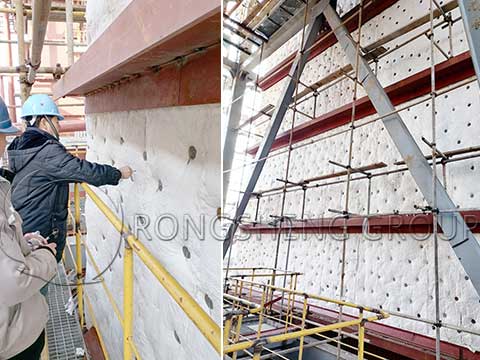
Magnesia Chrome Bricks for Copper Refining Furnaces
Magnesia-Chrome Bricks for Copper Refining Furnaces
Magnesia-chrome refractories, as excellent materials resistant to slag erosion, have broad application prospects in the copper smelting field. A certain solid block refining furnace (NGL) is of great significance for the recycling of scrap copper and can alleviate the shortage of copper concentrate resources. The erosion and damage mechanism of magnesia-chrome refractories after use in copper smelting NGL furnaces was investigated using scanning electron microscopy, energy dispersive spectroscopy, and diffraction. The results show that:
Magnesia-chrome bricks are subjected to the dual effects of slag and molten copper. The formation of the olivine phase and the dissolution of periclase grains are the main causes of chemical damage to the furnace lining material. With the penetration of slag and the dissolution of periclase grains, molten crude copper and copper oxides exhibit stronger penetration capabilities. The edges of matrix chromite particles and the grain boundaries, pores, or cracks of magnesia aggregate are filled with a large amount of molten crude copper and copper oxides, disrupting the direct bonding of magnesia-chrome sand, chromite spinel, and periclase. This molten metal can penetrate deep into the internal structure of magnesia-chrome bricks, reaching depths of over 260 mm. SO2–O2-containing gases diffuse into the original brick-like layer on the cold surface of the refractory brick. Due to the dissociation of calcium magnesium olivine at the grain boundaries, SO2/SO3 in the gaseous medium reacts with CaO in the brick to form CaSO4. XRD results confirm the presence of the CaSO4 phase in the reaction layer on the cold surface of the refractory brick. The related reactions under the influence of SO2–O2 gas diffusion cause volume expansion, leading to a porous structure and exacerbating the melting and erosion of the refractory material.
Rongsheng Magnesia-Chrome Brick Manufacturer
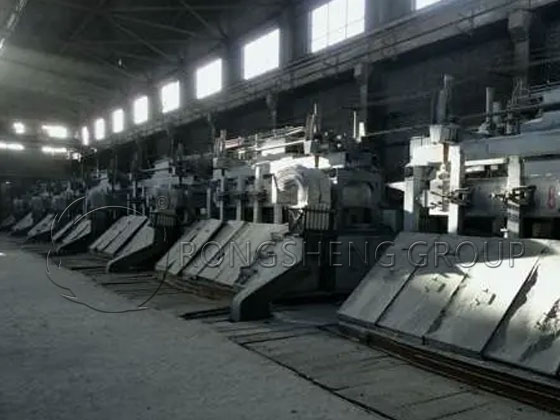
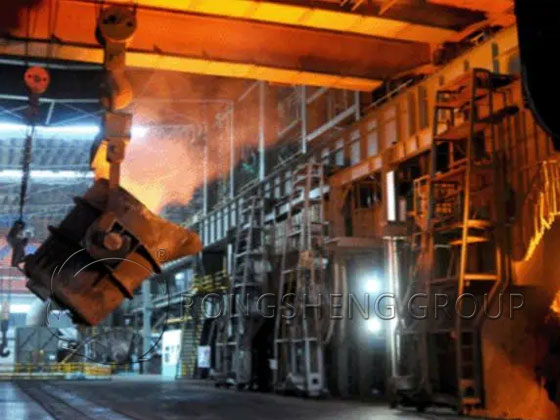
Magnesia-chrome bricks are the most widely used refractory bricks in copper smelting furnaces. They are a primary component in common copper smelting furnaces such as top-blown converters, horizontal converters, anode furnaces, flash furnaces, electric furnaces, Kifset furnaces, Ausmelt furnaces, reverberatory furnaces, and oxygen-enriched bottom-blown furnaces. In practical applications, the appropriate configuration of magnesia-chrome bricks should be determined based on the furnace structure and operating environment. Besides magnesia-chrome bricks, magnesia-chrome ramming mixes, magnesia sand fillers, and magnesia-chrome castables are also used in copper metallurgical furnaces. Contact Rongsheng for a free quote on magnesia-chrome bricks for copper smelting furnaces.