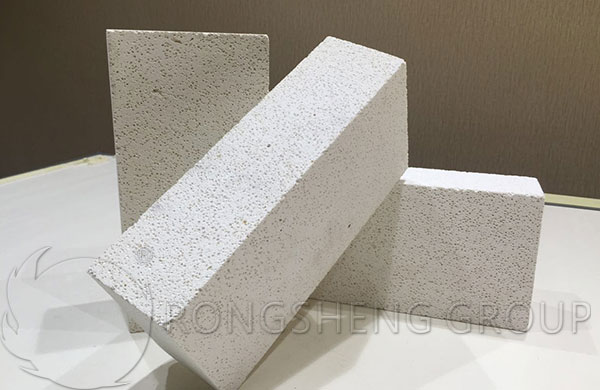
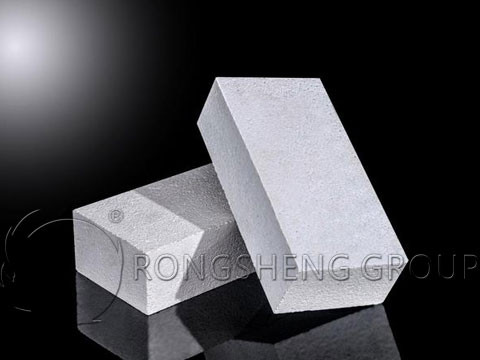
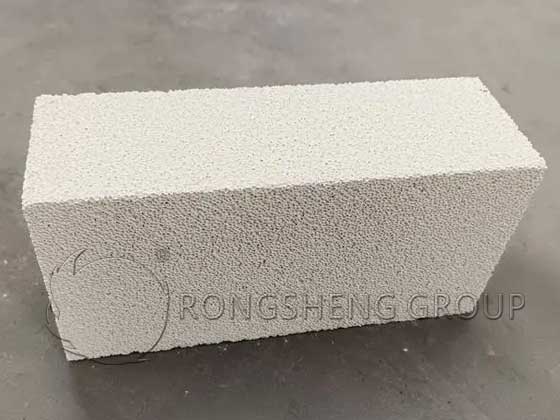
Mullite lightweight bricks offer numerous advantages when used as ceiling materials.
First, their low density—typically ranging from 0.6 to 1.2 g/cm³—results in a lighter weight, making them easier to handle and install.
Second, mullite lightweight bricks possess excellent thermal insulation properties; with a low thermal conductivity (usually between 0.2 and 0.4 W/(m·K)), they effectively minimize heat transfer and reduce energy consumption.
At the same time, despite their low density, these bricks exhibit excellent fire resistance. They can withstand temperatures exceeding 1600°C, allowing for direct flame contact and use as linings in high-temperature kilns.
Furthermore, they offer good resistance to chemical corrosion, ensuring a long service life even in environments prone to chemical attack.
In ceiling applications, their lightweight nature avoids placing excessive loads on the building structure, while their superior thermal insulation makes them ideal for facilities requiring precise temperature control.
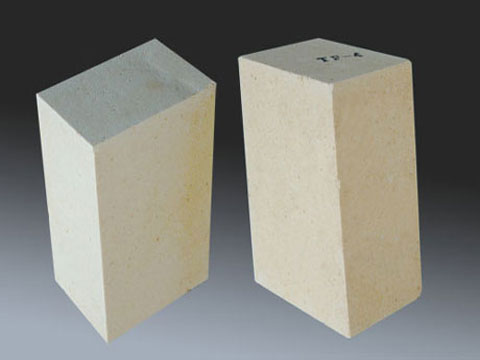
In contrast, heavy bricks—such as heavy-duty high-alumina bricks—are significantly heavier than their lightweight counterparts. Designed for direct contact with flames during operation, heavy bricks are primarily valued for their high-temperature resistance. They are manufactured by combining high-alumina bauxite clinker with refractory clay using multi-stage grading, followed by mechanical pressing and high-temperature firing. Their application focuses on withstanding extreme conditions; in industries such as steelmaking, oil refining, metallurgy, and power generation, heavy bricks can endure higher temperatures and pressures. However, when used in ceilings, the weight of heavy bricks can impose significant stress on the building structure, and their thermal insulation performance is relatively poor.
What are Lightweight Mullite Insulating Bricks for Suspended Roofs?
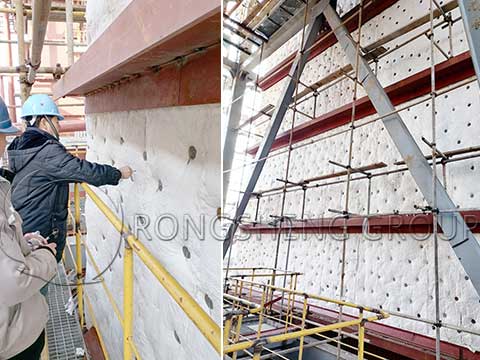
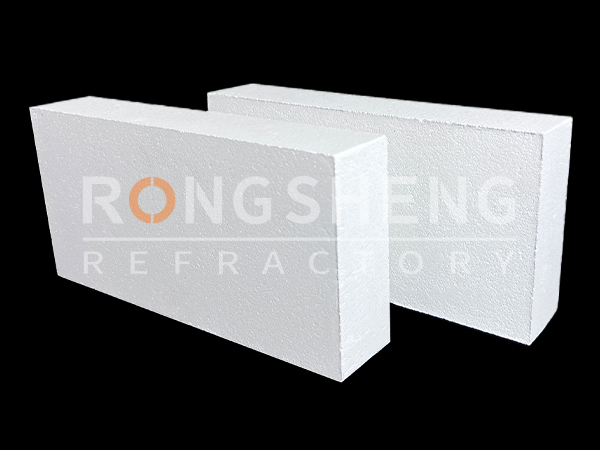
Mullite suspended roof bricks offer excellent high-temperature resistance and erosion resistance, making them ideal lining materials for various high-temperature equipment. As a lining material, lightweight mullite insulating bricks effectively protect equipment from the effects of high temperatures and acid-alkali corrosion, thereby extending service life and reducing production costs.
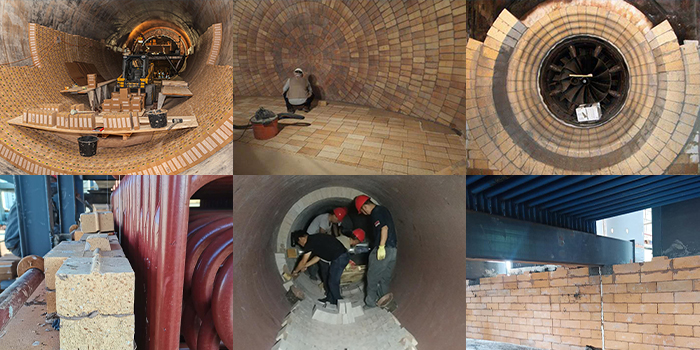
Additionally, these bricks possess superior thermal insulation properties, which minimize heat loss and lower energy consumption. They are primarily used for the suspended roofs of neutral-atmosphere high-temperature kilns operating at temperatures between 1200°C and 1500°C. Key applications include the high-temperature zones of industrial furnaces—such as tunnel kilns, shuttle kilns, roller hearth kilns, and pusher-plate kilns—as well as serving as backup insulation layers for other refractory materials. While heavy-duty bricks perform well in certain high-temperature industrial settings, mullite suspended roof bricks are undoubtedly the superior choice for applications that prioritize aesthetics, decorative appeal, and low weight. This highlights the advantages of choosing mullite suspended roof bricks: they not only meet the performance requirements of specific applications but also excel in terms of aesthetics and practicality.
The Superior Performance of Mullite Furnace Ceiling Bricks
Low Density Facilitates Handling and Installation
Mullite lightweight bricks typically have a density ranging from 0.6 to 1.2 g/cm³, making them significantly lighter than heavy-duty bricks. This lightness makes handling and installation easier, thereby reducing the physical strain on construction workers. For large-scale building projects or spaces with high ceilings, the lightweight nature of these bricks reduces the need for heavy handling equipment and boosts construction efficiency. Furthermore, the reduced weight places less load-bearing demand on the building structure, which can help lower overall construction costs. For instance, in commercial ceiling installations, mullite lightweight bricks can be installed quickly without imposing an excessive burden on the building’s framework. Additionally, their low weight minimizes safety risks during installation, preventing accidents caused by handling overly heavy materials.
Excellent Thermal Insulation Properties
Mullite lightweight bricks offer outstanding thermal insulation performance. They possess low thermal conductivity, typically in the range of 0.2–0.4 W/(m·K). This means they effectively inhibit heat transfer, mitigating the impact of temperature differences between the interior and exterior environments. When used in ceilings, these bricks provide effective thermal insulation, helping to reduce energy consumption. In winter, for example, they prevent indoor heat loss, keeping the interior warm; in summer, they block external heat from entering, thereby reducing the load on air conditioning systems. In contrast, heavy-duty bricks have higher thermal conductivity and relatively poor insulation performance; they are primarily designed for applications requiring high-temperature resistance or wear resistance rather than thermal insulation.
Superior Fire Resistance
Despite their low density, mullite lightweight bricks exhibit excellent fire resistance, capable of withstanding temperatures exceeding 1600°C. This makes them suitable for use in environments where exposure to high temperatures is a factor. In suspended ceiling applications, should an emergency such as a fire occur, lightweight mullite bricks can maintain structural stability for a period of time, thereby buying valuable time for personnel evacuation and firefighting efforts. While heavy-duty bricks also possess excellent fire resistance, they are primarily designed for high-temperature environments involving direct contact with flames, such as inside industrial furnaces. In such settings, heavy-duty bricks can withstand higher temperatures and pressures; however, for standard suspended ceilings, this level of fire resistance is often excessive, and the bricks’ heavy weight makes them unsuitable for overhead installation.
Strong Resistance to Chemical Attack
Lightweight mullite bricks exhibit superior resistance to chemical corrosion, ensuring a long service life even in environments exposed to various corrosive agents. This corrosion resistance is particularly crucial in specialized industrial settings or areas where chemical substances are present. For instance, when used in suspended ceilings within chemical processing plants or laboratories, lightweight mullite bricks can withstand chemical exposure while maintaining the ceiling’s structural integrity and stability. In contrast, heavy-duty bricks may not perform as well in terms of chemical corrosion resistance; their properties are primarily optimized for high-temperature tolerance and wear resistance, leaving them relatively more vulnerable to chemical attack.
The thermal conductivity of heavy-duty bricks exceeds 1.0 W/(m·K) (at a mean temperature of 350 ± 25°C), whereas that of mullite suspended-roof bricks is relatively low, typically ranging from 0.2 to 0.4 W/(m·K) (at the same mean temperature). This indicates that mullite suspended-roof bricks offer far superior thermal insulation compared to heavy-duty bricks. In practical applications, effective thermal insulation minimizes energy loss and enhances energy efficiency. For instance, in settings requiring stable temperatures—such as industrial furnaces and kilns—the inferior insulation of heavy-duty bricks can lead to increased energy consumption and higher operating costs.
(II) Disadvantages Stemming from High Density
Heavy-duty bricks generally have a density exceeding 2.0 g/cm³. This high bulk density imparts high mechanical strength, a long service life, excellent chemical stability (they do not react with process materials), and superior high-temperature resistance (withstanding temperatures up to 1790°C). They are particularly suitable for use in high- and low-temperature shift converters, reforming furnaces, hydro-converters, desulfurization vessels, and methanation furnaces in fertilizer plants, where they serve to disperse gas and liquid phases while supporting, covering, and protecting the catalyst; they are also used in hot-blast stoves and heating/conversion equipment within the iron and steel industry. However, this high bulk density also entails certain drawbacks.
First, it increases the structural load; in applications with strict weight limitations, this can pose safety risks.
Second, the high density of these bricks makes handling and installation difficult, requiring greater expenditure of manpower and material resources.
In contrast, mullite suspended-roof bricks have a lower density; being lightweight and shock-resistant, they are easier to handle and install, reduce the structural load, and offer greater economic efficiency and durability.
Comprehensive Consideration and Selection
Mullite lightweight bricks are selected for suspended roofs primarily due to advantages such as low density (facilitating handling and installation), superior thermal insulation, excellent fire resistance, and strong resistance to chemical corrosion. Heavy-duty bricks, on the other hand, are better suited for high-temperature operating environments such as kilns and metallurgical furnaces; their characteristics—high weight, high heat resistance, and high strength—enable them to play a vital role in such settings. In practice, the appropriate brick type should be selected based on the specific application scenario and requirements.