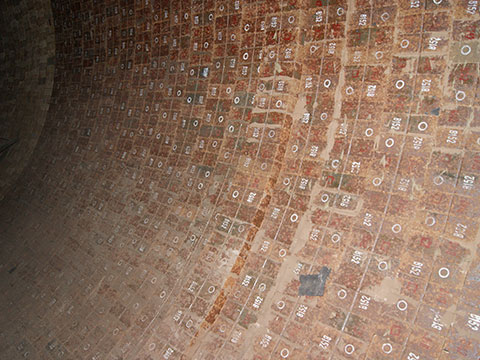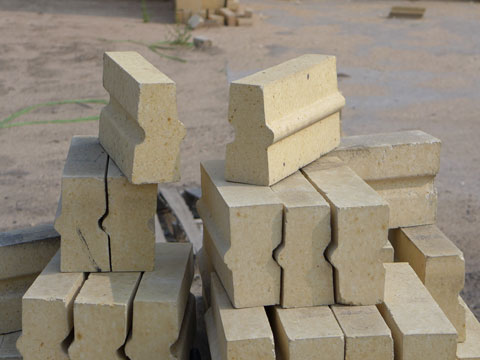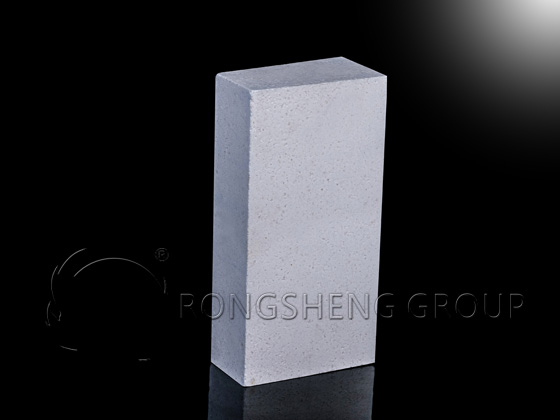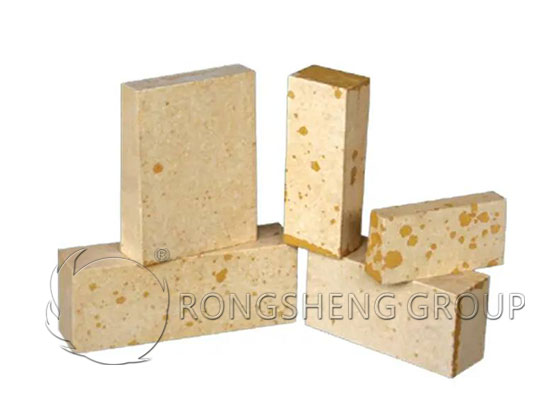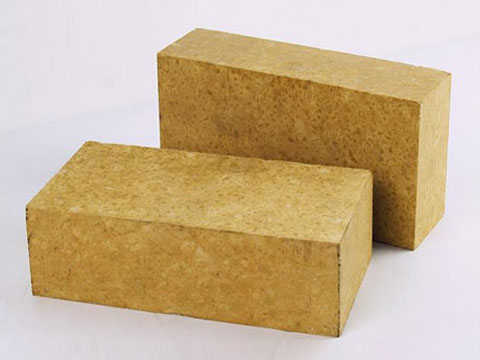
Bauxite-silicon carbide bricks—formerly known as HMS high-wear-resistance bricks and also referred to as “silicon-mullite bricks” in the building materials industry—exhibit a wear resistance coefficient more than five times higher than that of phosphate-bonded high-alumina bricks. Silicon carbide, a key component, is characterized by high refractoriness, high thermal conductivity, and a low coefficient of thermal expansion; it remains stable at temperatures up to 2600°C in a reducing atmosphere. Silicon carbide products can be categorized based on their bonding phases, such as mullite-bonded, clay-bonded, silica-bonded, Si3N4-bonded, Sialon-bonded, and Si2N2O-bonded varieties. Rongsheng Refractory Brick Manufacturer provides specifications regarding the performance metrics of these silicon carbide-based refractories with various bonding systems.
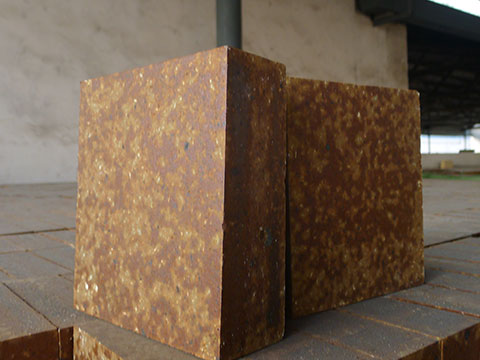
China possesses abundant natural high-alumina bauxite resources—specifically of the diaspore-kaolinite type—leading to significant interest in the production of multiphase refractories using high-alumina bauxite clinker and SiC. Special-grade or first-grade high-alumina clinker consists primarily of corundum, mullite, and a small amount of glass phase, forming the structural skeleton of the bauxite-silicon carbide material, while the matrix is composed of SiC, SiO2, and SiO2-based materials. A secondary mullitization effect occurs when the SiO2 generated by the oxidation of silicon carbide reacts with the Al2O3 present in the matrix. To prevent material strength degradation caused by excessive oxidation of the silicon carbide, antioxidants such as metallic silicon or aluminum are typically added; however, the addition level generally does not exceed 2%, as excessive mullitization resulting from higher dosages can lead to increased apparent porosity. Additionally, impurities such as titanium oxide and iron oxide within the bauxite act as sintering aids, promoting the densification of the material during firing. Consequently, the bauxite-silicon carbide material is composed mainly of mullite, corundum, silicon carbide, and a glass phase, with mullite, glass phase, and silicon carbide forming at the interfaces between the particles.
Excellent Properties of Bauxite-Silicon Carbide Bricks
With advancements in bauxite-silicon carbide processing technology, the quality of these products has improved significantly, and technical performance requirements have risen sharply. Generally, bauxite-silicon carbide bricks exhibit the following excellent properties:
(1) High-Temperature Resistance
The lining bricks must withstand continuous high-temperature loads of around 1400°C; the refractoriness under load (softening temperature) should exceed 1500°C to ensure good dimensional stability at operating temperatures.
(2) Good Wear Resistance
The primary crystalline phases of bauxite-silicon carbide materials are mullite, silicon carbide, and corundum. Silicon carbide, in particular, contributes excellent wear resistance, high Mohs hardness, and high bulk density.
(3) Excellent Thermal Shock Resistance
When used in cement rotary kilns, the refractory material undergoes cyclic exposure—alternating between contact with cement clinker and direct exposure to the kiln atmosphere—with every rotation. This process typically involves temperature fluctuations of nearly 400°C, and the resulting periodic thermal stress can cause significant damage to the material. Therefore, bauxite-silicon carbide composite materials must possess excellent thermal shock resistance.
(4) Excellent Resistance to Acidic and Alkaline Gas Corrosion
Gases such as SO₂, Na₂O, and K₂O in the kiln airflow can easily penetrate the material’s interior through cracks or pores, reacting with its components and causing degradation. Consequently, bauxite-silicon carbide materials require strong resistance to corrosion by acidic and alkaline gases.
(5) Good Thermal Insulation Performance
The thermal conductivity of bauxite-silicon carbide (2.3–2.5 W/(m·K)) is lower than that of basic refractory products (2.69–2.74 W/(m·K)). When used in various sections of cement rotary kilns, these bricks can reduce the kiln shell temperature by more than 100°C compared to basic bricks, offering significant benefits for energy conservation and environmental protection.
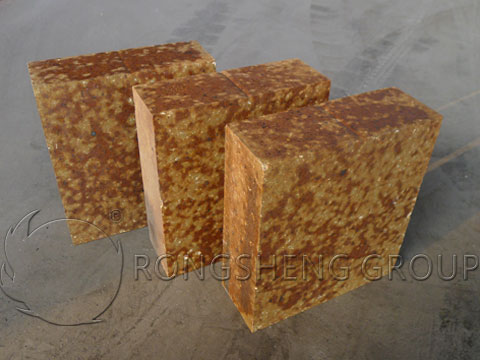
Deterioration Mechanisms of Bauxite-Silicon Carbide Bricks in Cement Rotary Kilns
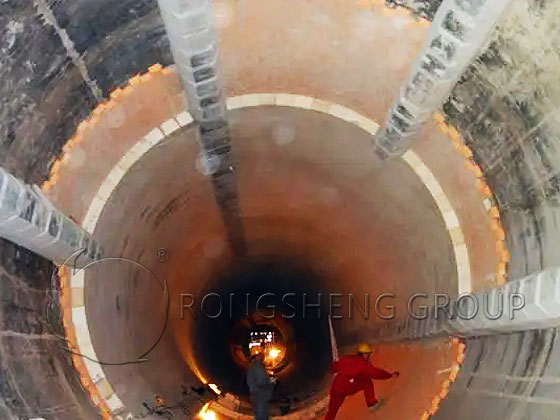
Modern dry-process cement rotary kilns have significantly reduced the demand for traditional refractories while increasing the need for high-quality alternatives. Bauxite-silicon carbide bricks are widely used in the transition zone of these kilns. Operating in a high-temperature chemical environment with material temperatures around 1300°C, the refractories in this zone are subject to several primary modes of deterioration:
- First: Rising kiln temperatures and increased energy consumption intensify chemical corrosion of the refractory material.
- Second: Larger kiln diameters and faster rotational speeds exacerbate mechanical abrasion.
- Third: Difficulty in forming a stable kiln coating leaves the refractory material exposed to kiln gases or in direct contact with the raw material feed.
Alkaline gases and cement clinker create a harsh environment for the refractory lining. An imbalance in the alkali-to-sulfur ratio allows alkaline ions to penetrate the refractory’s microstructure; these ions react with alumina and silica within the material, causing volumetric expansion that leads to cracking and structural spalling.
Furthermore, the presence of alkaline ions lowers the temperature at which the liquid phase forms within the CaO-SiO2-Al2O3-Fe2O3 system. The formation of a liquid phase has two detrimental effects: it accelerates the infiltration of cement clinker constituents (such as C2S, C3S, C4AF, and C3A) into the refractory, and it reduces the material’s abrasion resistance, leading to cracking and deterioration as the clinker tumbles within the kiln.
Performance Improvement of Bauxite-Silicon Carbide Bricks
Bauxite-silicon carbide bricks are characterized by good wear resistance, high load-softening temperatures and strength, and excellent thermal shock resistance and resistance to alkali gas corrosion. To enable these bricks to meet the demanding requirements of cement rotary kilns, their performance must be appropriately enhanced. Current improvements primarily focus on microstructural design within the multiphase system, as alkaline gases in the kiln tend to corrode refractory materials by penetrating cracks and pores.
Introducing metallic silicon powder into the bauxite-silicon carbide composite refractory allows for the formation of a liquid phase via oxidation at high temperatures; this fills some of the pores, thereby increasing material densification and inhibiting the penetration of alkaline gases. Additionally, studies indicate that replacing bauxite particles with porous mullite aggregates coated in silica sol enhances resistance to alkali gas corrosion, as the lightweight aggregates effectively absorb the alkaline gases. Compositional adjustments also play a role; for instance, when using bauxite, clay, and silicon carbide as primary raw materials, adjusting the molar percentage of alumina in the matrix to 0.6 yields good resistance to alkali gas corrosion. Furthermore, adding ZrSiO4 to the matrix improves the material’s resistance to gas corrosion. Finally, incorporating mullitized andalusite raw materials into aluminosilicate refractories limits liquid phase formation during gas corrosion processes driven by alkali ions (such as sodium or potassium), thereby enhancing the material’s resistance to alkali corrosion.