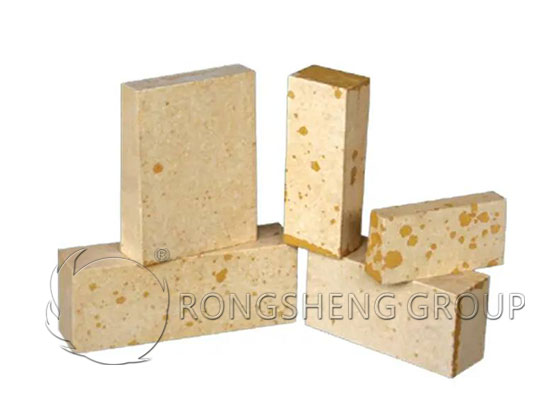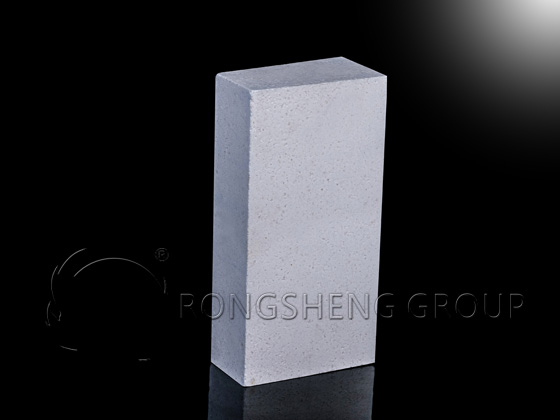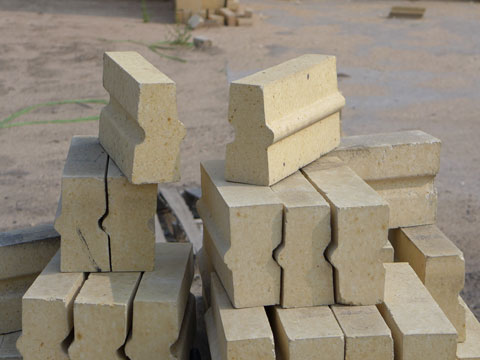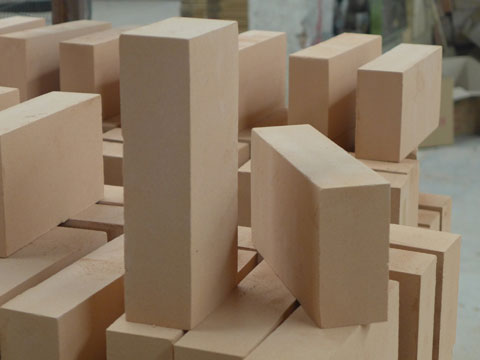
Silica bricks are the most common silica refractory materials. Due to their excellent properties, such as high-temperature strength and load softening temperature, good resistance to high-temperature creep, and strong resistance to acid slag erosion, they are widely used in industrial production.
Classification of Silica Bricks
Silica bricks generally contain three crystalline phases: tridymite, cristobalite, and a small amount of residual quartz, with the true density increasing in that order. Generally, true density, coefficient of thermal expansion, and the content of tridymite and residual quartz are the most critical performance indicators for characterizing silica bricks. The greater the degree to which quartz transforms into volume-stable tridymite and high-temperature-performance cristobalite during firing, the lower the residual quartz content, the lower the true density of the silica brick, the better its high-temperature volume stability, and the smaller its re-expansion during use.
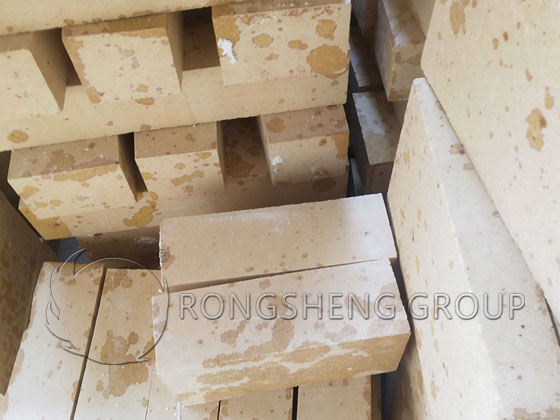
Raw Material Selection for Silica Bricks
The main type of silica suitable for refractory materials is quartzite, which can be classified into crystalline silica and cemented silica based on its microstructure. Generally, crystalline silica has higher purity, higher raw material density, larger quartz crystals, and a slower transformation rate during heating. Cemented silica often contains small amounts of impurities, has relatively lower purity, smaller quartz crystals, a higher cement content, and a faster transformation rate during heating. Therefore, a reasonable production process should be developed based on the characteristics of the silica raw materials to produce silica bricks suitable for different applications.
Crystalline and cemented silica each have their advantages and disadvantages. Combining both in a blend to leverage their respective strengths is also a good option.
Selection of Mineralizers
In the production of silica bricks, a certain amount of mineralizer is often introduced. Its main function is to utilize the mineralizer and SiO2 or other impurities to form a low-melting-point, high-temperature liquid phase, promoting the transformation of quartz into tridymite and cristobalite during firing. Simultaneously, it can buffer the rapid volume expansion caused by excessively rapid phase transformation during firing, which can lead to loosening and cracking of the finished product.
Currently, lime and iron scale are widely used mineralizers. Lime is usually added in the form of lime slurry, which increases the strength of the brick blank after molding and can also react with SiO2 during the low-temperature firing stage (600~700℃) to further increase the strength of the brick blank. The pseudo-wollastonite formed after 1100℃ can form a liquid phase with other mineralizers, causing quartz to transform into tridymite. Iron scale is often added simultaneously with lime as a mineralizer, which can significantly reduce the temperature and viscosity at which the liquid phase appears, reducing cracks in the finished product. To ensure uniform distribution of iron scale in the batch and achieve a good mineralization effect, the mass fraction of particles ≤0.088mm is required to be >80%. In addition to lime and iron scale, fluorite and feldspar composites, MnO2, and C3S have also been shown to have a positive impact on promoting the formation of tridymite.
Besides the type of mineralizer, the particle size of the mineralizer is also important. The finer the particle size of the mineralizer, the more uniform its distribution in the siliceous raw materials, and the better its effect. Nanoscale mineralizers exhibit good dispersibility and higher mineralization efficiency, resulting in better synchronization of volume expansion and contraction during crystal transformation within siliceous products, both internally and between particles, thus reducing cracks and porosity caused by volume stress. Simultaneously, they improve the physical and mechanical properties of silica bricks, reduce the true density of siliceous products, and lower the residual quartz content.
Introduction of Additives
For different applications, certain properties of silica bricks, such as thermal conductivity, wear resistance, and thermal shock resistance, require further enhancement. In this case, in addition to the appropriate selection of silica raw materials and the addition of suitable mineralizers, a certain amount of additives needs to be introduced to achieve the desired effect.
Adding SiC to silica bricks can promote the formation of tridymite, reduce the thermal expansion rate and creep rate of silica bricks, and improve the thermal conductivity and high-temperature flexural strength. Adding Si3N4 can improve the thermal shock stability of silica bricks, and at an addition amount of 5%, it exhibits a high tridymite content and a dense microstructure. Adding metals and their oxides, such as TiO2, to siliceous refractories can reduce the apparent porosity of the material, increase the bulk density, reduce the residual quartz content, increase the tridymite content, and optimize the material’s strength and refractory properties.
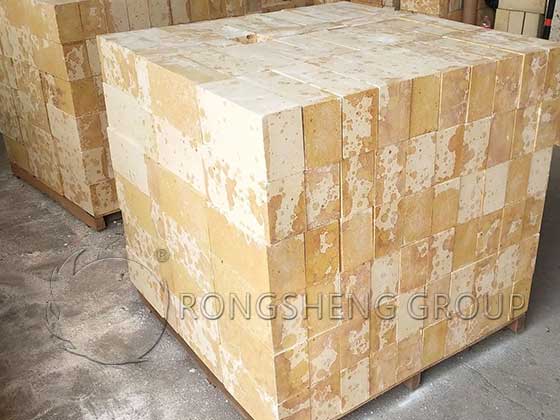
Pricing on Silica Bricks
The pricing on silica bricks is influenced by various factors, including product specifications, applications, production processes, and market supply and demand. Below is a general price reference for silica bricks in different scenarios:
Ordinary Industrial Silica Bricks
Ordinary silica bricks, generally used in industrial furnaces such as coke ovens and hot blast stoves, are typically priced between 1500-2500 RMB/ton (ex-factory price including tax).
For example, some manufacturers offer coke oven silica bricks (such as JG-94 and RG-95 models) at a mainstream price of 3000-3500 RMB/ton, but this is for specific high-performance or high-specification products.
Silica Bricks for Glass Furnaces
High-quality silica bricks used in the upper structure of the cooling section of glass furnaces, due to their high requirements for purity and density, are generally priced between 4000-4500 RMB/ton (ex-factory price including tax). For example, silica bricks used in photovoltaic glass all-oxygen furnaces need to meet indicators such as high load softening temperature and low re-firing change, and their prices fall within this range.
Special Specifications or Customized Silica Bricks
For silica bricks requiring special sizes, shapes, or high purity (e.g., SiO₂ content ≥ 96.5%), the price will be higher, potentially reaching 3000-5000 RMB/ton or even higher. The specific price will be determined based on the customization requirements.
Please note that the prices above are approximate market references. Actual prices may fluctuate due to factors such as region, manufacturer, and purchase volume. It is recommended to contact silica brick manufacturers or suppliers directly to obtain an accurate quote based on your specific needs.