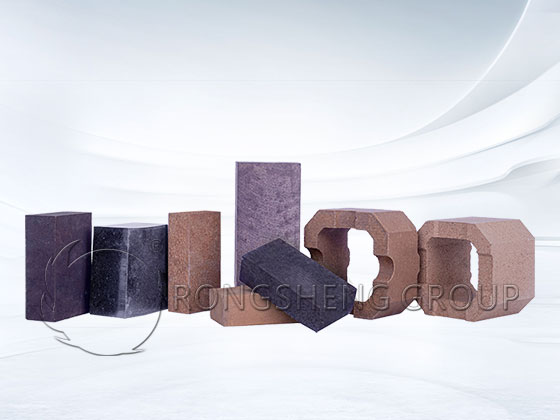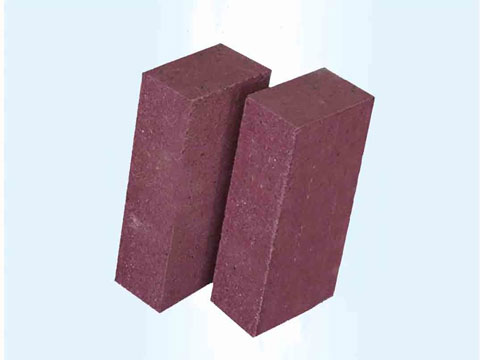
For ladle refining operations, magnesia-chrome refractories remain the most erosion-resistant refractories. However, a problem with this type of refractories is that it is difficult to reconcile erosion resistance and thermal shock resistance. That is, when traditional direct-bonded magnesia-chrome bricks have high erosion resistance, their thermal shock resistance is low. Conversely, high thermal shock resistance results in lower erosion resistance.
Performance of Directly Bonded Magnesia-Chrome Bricks
The relationship between Cr2O3 content and slag resistance in directly bonded magnesia-chrome bricks. The relationship between Cr2O3 content and critical temperature difference in directly bonded magnesia-chrome bricks. The critical temperature difference is the temperature difference at which the flexural strength of a sample reaches zero after undergoing thermal shock tests with various temperature differences. Comparison shows that as the Cr2O3 content increases, the erosion resistance of directly bonded magnesia-chrome bricks improves, but its thermal shock resistance decreases.
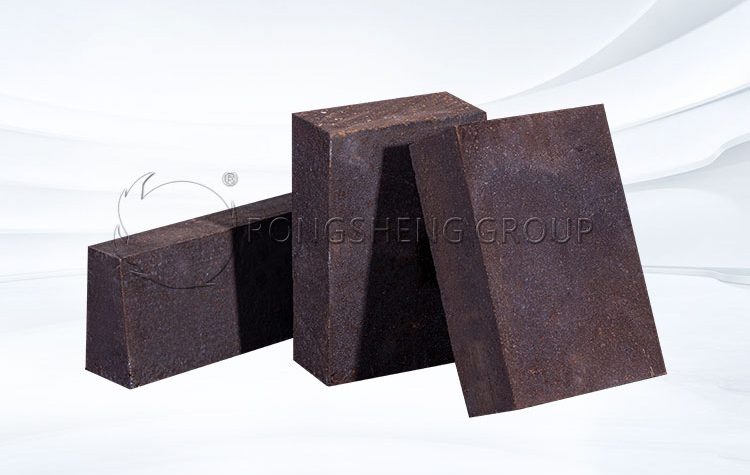
Because the operating conditions of magnesia-chrome bricks vary in different refining units and different parts of the same unit, their optimal service life also varies. Therefore, only when their critical temperature difference equals the maximum permissible temperature change, and refractory materials are selected empirically to suit the operating environment, can the service life of the material be improved.
In directly bonded magnesia-chrome bricks, MgO and chromite are the main components, but their properties are different. Because the coefficient of expansion of chromite is smaller than that of MgO, cracks are generated around the chromite after firing, which can prevent the propagation of cracks. This has the effect of interrupting cracks within the chromite. To improve the thermal shock resistance of directly bonded MgO-Cr2O3 bricks, an effective method is to increase the amount of chromite. However, this also has negative effects. Because chromite inevitably contains impurities such as SiO2, these impurities increase in the magnesia-chrome bricks, hindering the implementation of ultra-high temperature firing techniques used to improve corrosion resistance. Consequently, the corrosion resistance of this type of refractory material decreases.
Improving the Performance of Directly Bonded Magnesia-chrome Bricks
To achieve both corrosion resistance and thermal shock resistance in directly bonded magnesia-chrome bricks, two approaches are possible:
- (1) Controlling the particle size distribution of the raw materials and reducing the critical particle size.
- (2) Selecting special additives.
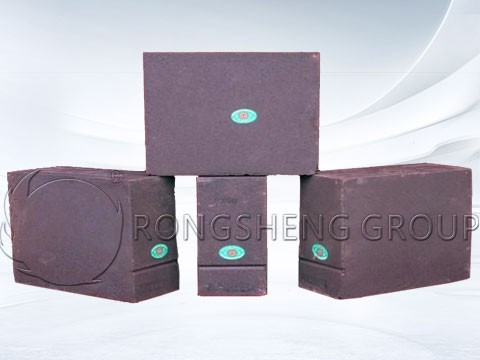
To obtain directly bonded magnesia-chrome bricks with both thermal shock resistance and corrosion resistance, they are produced according to specific batching methods, improving their thermal shock stability and corrosion resistance. The characteristics of these directly bonded magnesia-chrome bricks are summarized as follows:
- (1) With the increase of particle size greater than 1 mm, the apparent porosity also increases.
- (2) When the content of particles greater than 1 mm decreases to 30 wt%, the flexural strength increases.
- (3) With the decrease of the content of particles greater than 1 mm, the corrosion resistance increases. Specifically, when the content of particles greater than 1 mm is reduced to 5 wt%~0 wt%, the corrosion resistance is approximately 20% higher than when the content of particles greater than 1 mm is 34 wt%.
- (4) Directly bonded magnesia-chrome bricks with a particle content greater than 1 mm ranging from 5 to 34 wt% exhibited no spalling after 25 cycles of repeated heating and air cooling.
Microstructural studies revealed that when the particle content greater than 1 mm was below 5 wt%, the R₂O₃ in the chromite diffused almost entirely to the center of the MgO particles due to the use of MgO particles smaller than 1 mm. Therefore, secondary spinel was formed throughout the MgO particles, a key reason for their excellent erosion resistance.
Further microstructural observations showed that repeated heating and cooling resulted in the formation of microcracks around several MgO regions with a diameter of approximately 0.5 mm. These microcracks were cut off at the chromite particles larger than 1 mm, thus preventing the formation of larger cracks. In other words, the presence of a small amount of particles larger than 1 mm in the directly bonded magnesia-chrome bricks effectively suppressed crack propagation.
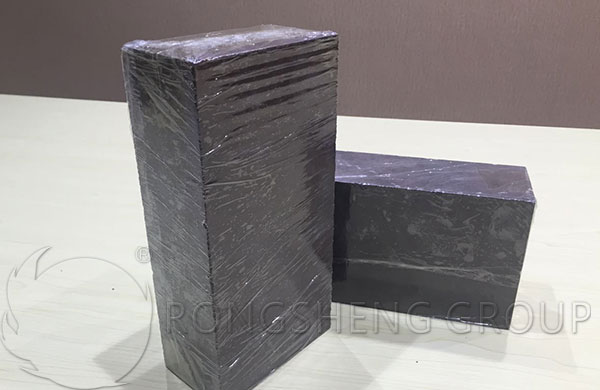
High-Performance Direct-Bonded Magnesia-Chrome Bricks
Based on the above discussion, the following conclusions can be drawn:
In direct-bonded magnesia-chrome bricks, reducing the content of particles larger than 1 mm improves its corrosion resistance while controlling the content of these particles within the range of 8 wt% to 4 wt%. This allows the formation of a network of fine cracks during heating and cooling, inhibiting the propagation of larger cracks and thus improving the thermal shock resistance of this type of magnesia-chrome brick. Clearly, this type of direct-bonded magnesia-chrome brick possesses both corrosion resistance and thermal shock resistance.
Adding special additives to magnesia-chrome bricks can also yield products with both corrosion resistance and thermal shock stability.
Adding special substances with a lower thermal expansion rate than magnesia-chrome bricks can lead to the formation of microcracks to improve thermal shock resistance.
Because the effect of adding this special additive to magnesia-chrome bricks is mainly to reduce the thermal expansion rate of the matrix, a magnesia-chrome brick with inconsistent thermal expansion rates between the particles and the matrix (improper thermal bonding) is obtained. Microstructural studies revealed that cracks are generated between this matrix with a relatively low thermal expansion rate and the coarse particles with a relatively high thermal expansion rate. The formation of these cracks leads to residual stress in the matrix near the coarse particles, thus increasing the energy value (K2R/E) required for the formation of the fracture surface in magnesia-chrome bricks. A higher K2R/E value is beneficial for improving the thermal shock resistance of this material.
However, magnesia-chrome bricks with a large amount of special additives have a greater number of cracks present after firing, resulting in a reduced effect on inhibiting crack propagation.
Directly bonded magnesia-chrome bricks exhibit the highest thermal stability when the energy required to form the fracture surface increases almost linearly with the crack propagation rate. Adding CaCO3 (12-10%), Cr2O3 (1wt%-20wt%), or Al2O3 (1wt%-20wt%) powder with a particle size of 0.1-2.0 mm to MgO-Cr2O3 bricks not only improves their corrosion resistance but also enhances their thermal shock resistance. This allows for the production of directly bonded MgO-Cr2O3 bricks with both high corrosion resistance and thermal shock resistance.