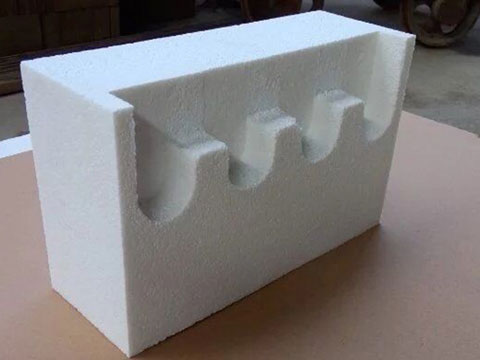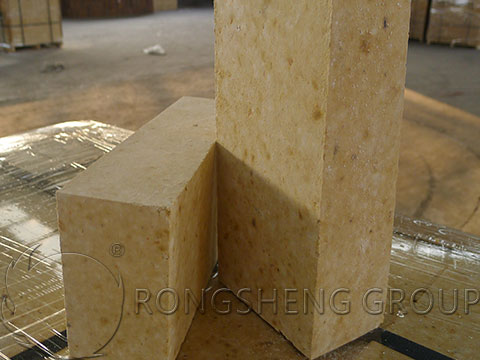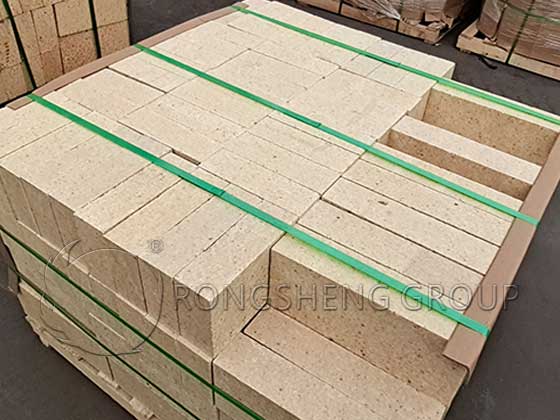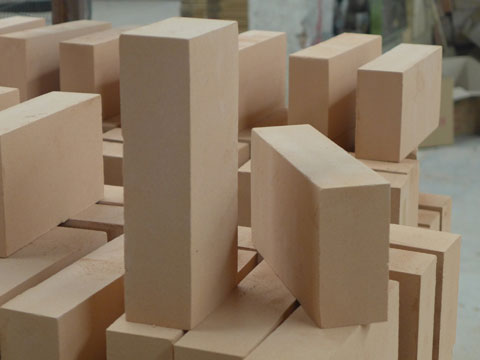
Lightweight Alumina Bubble Bricks are primarily made from alumina hollow balls, with the addition of ultra-fine powder and other process components, and are formed through drying. The process involves melting alumina raw materials into a liquid state in a pouring electric furnace, tilting the furnace at a certain angle to allow the solution to flow out from the pouring slot, and then mixing the alumina hollow balls with sintered alumina fine powder and binder in a certain proportion, forming a mixture that is fired at a high temperature of 1750°C in a shuttle kiln. These bricks are a high-grade lightweight refractory material. They are lightweight, resistant to high temperatures, exhibit minimal linear change, and have excellent thermal shock resistance. They can be used both as an insulating layer and directly in the working layer.
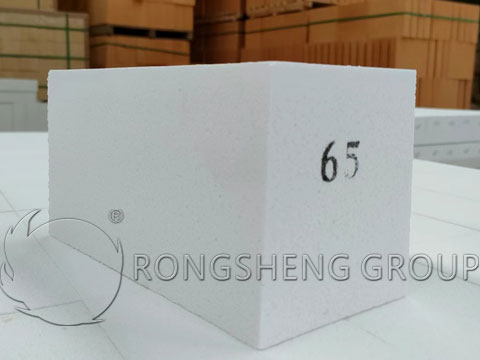
The refractory material used is heavy-duty refractory brick
Currently, the proportion of heavy refractory bricks used in refractory materials is higher. However, to optimize the structure of some furnace types, it is necessary to reduce the weight of the furnace body. The bulk density of high-temperature resistant heavy refractory bricks is above 2.6g/cm, while the bulk density of Alumina Bubble Bricks is only 1.1~1.5g/cm. When used in the same cubic meter volume, the use of hollow ball bricks can reduce the weight of the kiln body by 1-2 tons.
Consider from the perspective of cost
From a cost perspective, the prices of heavy bricks and Alumina Bubble Bricks are similar. In special areas, the price of alumina hollow ball bricks may be slightly higher than that of heavy bricks. However, in terms of weight, using Alumina Bubble Bricks can reduce 1-2 tons per cubic meter. Moreover, there is no need to add an insulating layer, which reduces the amount used and also saves fuel. Not only does it provide good performance, but it also significantly reduces costs.
Alumina hollow spheres have good thermal insulation performance
Due to the good insulation performance of alumina hollow balls, the reduction of heat dissipation improves thermal efficiency, achieving a 30% energy-saving effect. Therefore, some high-temperature zones within the lining of high-temperature kilns or the lining of shuttle kilns are entirely made of hollow ball bricks, which are lightweight and have significant use effects.
Alumina Bubble Bricks have a high aluminum content, low iron content, and low bulk density. They are used as working layers in the high-temperature zones of shuttle kilns and tunnel kilns, and can also be used as insulation layers in high-temperature areas.
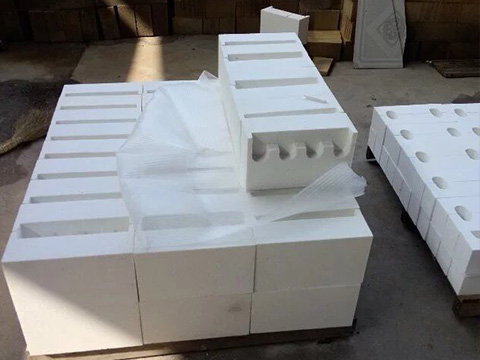
What are the application advantages of Alumina Bubble Bricks?
Alumina Bubble Bricks are high-performance lightweight refractory bricks, with advantages such as low specific gravity, good strength, stability, material saving, and long service life.
Alumina Bubble Bricks significantly reduce the overall weight of kilns, thereby decreasing the foundation load of the furnace, especially for use in furnace lining areas with structural load-bearing requirements. Moreover, due to their weight advantage, they can reduce heat dissipation and save 15-30% of gas energy.
Currently, in the market, when using heavy bricks as the working layer at the same operating temperature of the furnace lining, a layer of lightweight bricks is also required as an insulating layer. However, if Alumina Bubble Bricks are used, there is no need for an insulating layer, which not only saves on the amount of lining materials used but also reduces the consumption of lightweight insulating bricks by 80%. Moreover, the special particle grade of alumina hollow balls can withstand a certain load and airflow erosion.
Alumina Bubble Bricks are a lightweight refractory material with excellent high-temperature resistance and energy-saving properties, suitable for use in furnace linings in various atmospheres, especially in high-temperature kilns at 1800℃. The hollow balls can also be made into high-temperature castables and thermal insulation fillers, and can be directly exposed to flames during use. Currently, the bulk density of heavy bricks used in high-temperature resistant materials is 2.6~3.0g/cm3, while the specific gravity of Alumina Bubble Bricks is only 1.1~1.5g/cm2. For the same cubic meter volume, using Alumina Bubble Bricks can reduce the weight by 1.1~1.9 tons, greatly optimizing the furnace structure and reducing the weight of the furnace body.
The core value of Alumina Bubble Bricks lies in their perfect combination of three major advantages: high temperature resistance, lightweight, and efficient thermal insulation. They contribute to energy saving and consumption reduction in high-temperature industrial kilns, promote lightweight development, and enhance the temperature uniformity and stability of furnace linings.