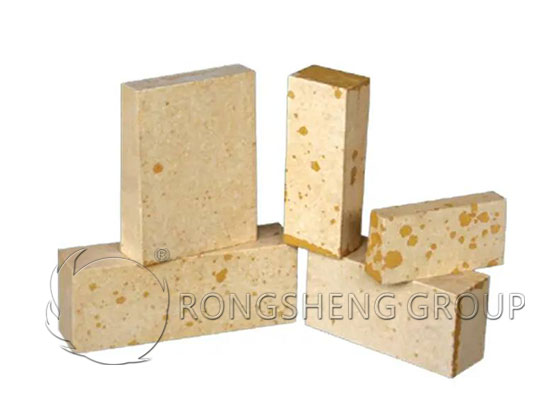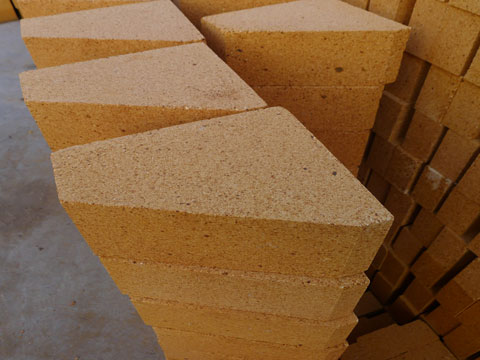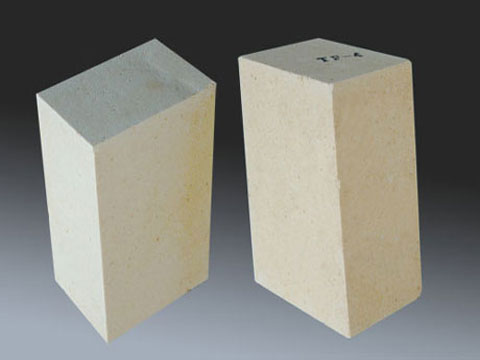
Why are high-alumina bricks used in rotary kilns? High-alumina bricks are a type of neutral refractory material, made from bauxite or other materials with high alumina content through molding and firing. They have high thermal stability, with a refractory temperature of around 1700°C, and are used as linings for glass melting furnaces, cement rotary kilns, and steelmaking electric furnaces. There are also high-alumina clay bricks and high-alumina brick products with high load-bearing capacity, low creep, and low porosity.
Applications of High-Alumina Bricks in Furnace Types
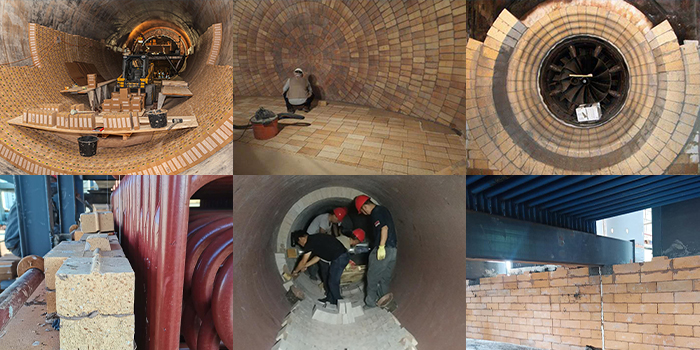
High-alumina bricks are mainly used for lining blast furnaces, hot blast stoves, electric furnace roofs, reverberatory furnaces, and rotary kilns. In addition, high-alumina bricks are widely used as checker bricks in open-hearth regenerators, stoppers in casting systems, and nozzle bricks.
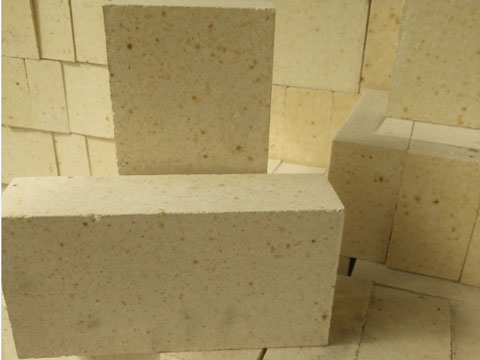
High-alumina bricks and clay bricks differ not only in their alumina content but also in their similar production processes. However, high-alumina bricks have a higher clinker content in their batching, reaching 90-95%, and their firing temperature is also much higher than that of clay bricks. First- and second-grade high-alumina bricks are mostly used in tunnel kilns with temperatures of 1500-1600℃, as well as in blast furnace roofs, reverberatory furnaces, and rotary kiln linings.
For rotary kilns: Anti-spalling high-alumina bricks vs. ordinary high-alumina bricks
Compared to ordinary high-alumina bricks, anti-spasting high-alumina bricks have the following prominent advantages: high thermal shock resistance, excellent chemical resistance, low coefficient of thermal expansion, and higher high-temperature resistance. Specifically:
- (1) Reduces the holding and firing temperature by approximately 150°C. As a refractory brick manufacturer, this saves natural gas consumption and reduces costs.
- (2) Compared to ordinary high-alumina bricks, the thermal conductivity of anti-spasting high-alumina bricks is 2/3 that of ordinary high-alumina bricks. Compared to magnesia-chrome bricks, it is only 1/3 to 2/3. Compared to basic refractory bricks, anti-spalling high-alumina bricks can reduce the surface temperature of the high-temperature kiln shell by 75-98°C, resulting in excellent energy savings.
- (3) Ordinary high-alumina bricks have poor thermal shock resistance and cannot be used in large dry-process kilns. Especially in areas where kiln temperature changes frequently, the resulting thermal stress can reduce the service life of high-alumina bricks, increasing maintenance and investment costs.
- (4) The service life of anti-sparging high-alumina bricks is more than 4 times that of clay bricks NZ-40, more than 12 times that of clay bricks CN-40 for steel ladles, more than 2 times that of GN-42 clay bricks for blast furnaces, more than 4 times that of phosphate-bonded high-alumina bricks, and more than 2.5 times that of imported kiln linings.
- (5) Anti-sparging high-alumina bricks possess excellent thermal shock stability, high load softening temperature, high high-temperature strength, resistance to alkali and clinker erosion, high-temperature wear resistance, anti-sparging, anti-skinning, anti-ringing, and low thermal conductivity.
- (6) With the rapid development of industry, the superior performance of anti-sparging high-alumina bricks can largely replace magnesia-chrome bricks. A “chromium-free” production environment is not only beneficial to workers’ health but also reduces environmental pollution.
Anti-sparging high-alumina bricks have strong anti-sparging ability and also have resistance to potassium, sodium, sulfur, chlorine, and alkaline salt erosion, as well as low thermal conductivity. This product has a wide range of applications, used in industrial kilns in metallurgy, machinery, chemical, power, building materials, and light industry. It is commonly used in the kiln mouth, cooling zone, and transition zone of cement rotary kilns with a capacity of 2000t/d or more. It can also be used in the transition zone and decomposition furnace of rotary kilns, as well as in the firing zone of metallic magnesium rotary kilns.
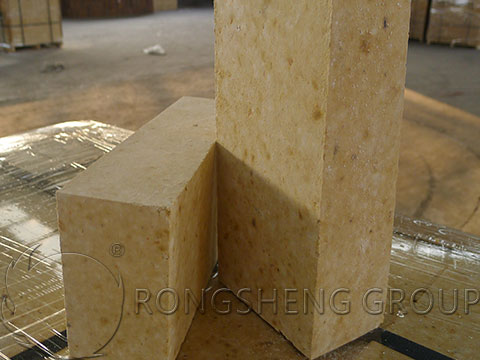
Low-Creep Andalusite High-Alumina Bricks
Low-creep andalusite high-alumina bricks contain andalusite, which, like sillimanite, possesses excellent high-temperature structural strength properties. Andalusite bricks exhibit a higher high-temperature creep rate than bauxite, corundum, and most mullite bricks. Andalusite is one of the ideal materials for low-creep refractory materials.
The production process of andalusite high-alumina bricks is similar to that of high-alumina bricks, using high-alumina bauxite, corundum, or mullite as aggregates, with the addition of a series of andalusite particles. The load softening temperature and creep rate of andalusite high-alumina brick products vary with the amount of andalusite concentrate added. As the amount of andalusite added increases, the load softening temperature of the product increases accordingly. When the andalusite addition is 15%, the load softening temperature reaches approximately 1600℃.
Physicochemical Properties of Low-Creep Andalusite High-Alumina Bricks After Adding Andalusite:
In high-alumina refractories, the addition of andalusite or andalusite composite additives results in very high-temperature structural strength values. Our research and experiments show that when 15%~20% or 25%~30% of andalusite concentrate is added, the load softening temperature of high-alumina products can be expected to reach 1600℃ or 1700℃, but this will vary slightly depending on the aggregate and matrix composition of the high-alumina products.
Correlation between Andalusite Addition Amount and Load Softening Temperature and Creep Rate of High-Alumina Products.
In summary, adding andalusite to high-alumina products can effectively increase the load softening temperature and reduce the creep rate, which varies depending on the content of andalusite in the high-alumina product itself, thereby improving product performance and better serving the high-temperature parts of kilns.