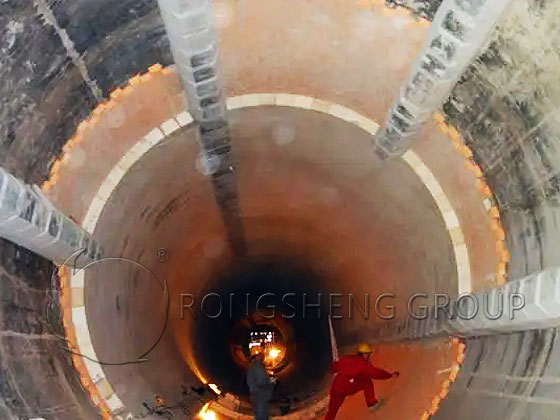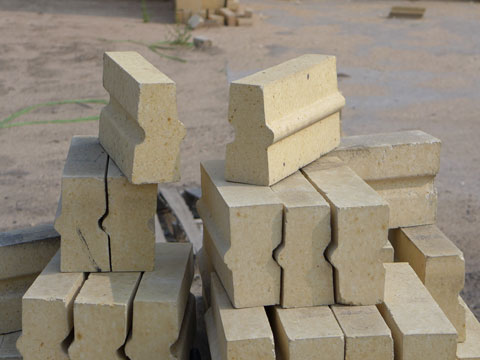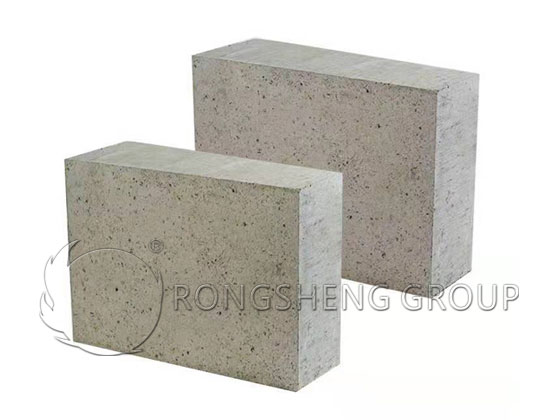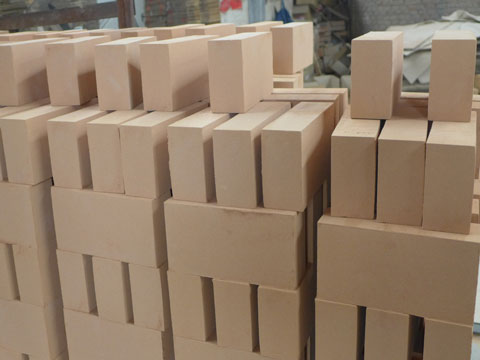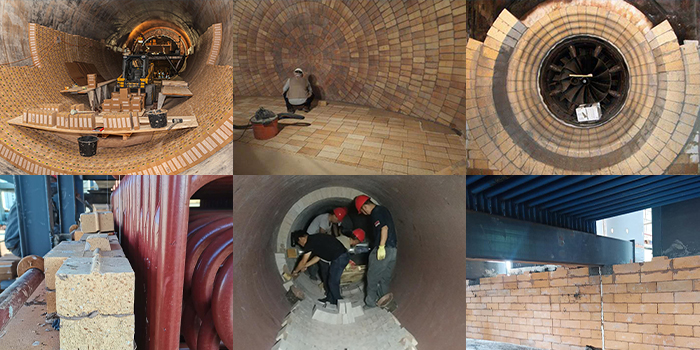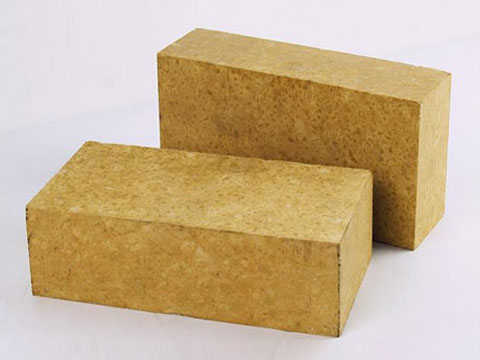
For phosphate bricks used as linings in rotary kilns, the choice of brick type (axe-shaped or fan-shaped) depends on the diameter of the kiln lining and the calculated dimensions. Currently, axe-shaped bricks are more common in the market, while fan-shaped refractory bricks are less so. Fan-shaped phosphate bricks are primarily used in lime rotary kilns; they are rarely used in other types.
Fan-Shaped or Axe-Shaped Bricks?
Regardless of whether they are fan-shaped or axe-shaped, the key to the lifespan of phosphate bricks lies in the appropriate brick dimensions and meticulous installation. The choice of brick shape depends on the user’s preference. If axe-shaped bricks are used, 2-3 types of interlocking bricks should be designed for each ring, with the main brick dimensions of the interlocking steel plate reduced by 10mm in length and width.
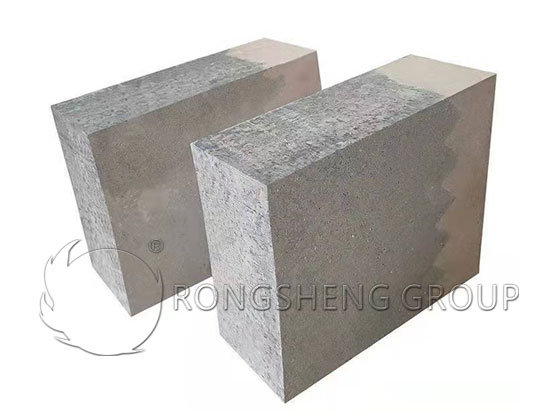
While some lime rotary kilns using phosphate brick linings do use fan-shaped bricks, this is not widespread. If fan-shaped bricks are used, interlocking bricks are unnecessary; during installation, a single brick is typically cut and laid in a circle for each ring. The jointing process involves laying phosphate bricks at the kiln head or when changing brick materials. The joints should be 10- 20 mm thinner than the main bricks and fan-shaped bricks. This means using two different thicknesses of phosphate bricks for the final two rings, tightly packed together. However, the inner and outer rings of the fan-shaped bricks have different curvatures, though not significantly different, resulting in a slight difference compared to the axe-shaped brick laying.
When using phosphate bricks for rotary kiln linings, regardless of whether axe-shaped or fan-shaped bricks are used, the kiln body must be inspected after installation. The jointing steel plates, checked for loosening during kiln inspection, are also crucial for ensuring a tight fit. Kiln inspection is essential to reinforce the phosphate brick lining and extend its service life.
Therefore, the quality of the phosphate bricks used in rotary kilns is paramount, and the type of brick used is less important. As long as the brick dimensions are appropriate, the type of brick used is irrelevant.
Refractory Materials for Rotary Kilns in Medical Waste Incineration
Rotary kilns for medical waste incineration operate in an acidic atmosphere, resulting in severe chemical erosion and mechanical wear of the incinerated materials. Furthermore, the start-up and shutdown of these kilns are highly unstable, leading to significant temperature fluctuations within the kiln. Therefore, the refractory materials used for the lining have specific requirements.
Due to the sliding of materials and friction with dust in the medical waste rotary kiln, the wear on the refractory lining is substantial, limiting the types of refractory bricks used in the kiln lining.
Dense clay bricks, also known as low-porosity clay bricks, are generally used in the transition zone. While dense clay bricks have a low aluminum content, their low porosity and good thermal shock resistance allow them to resist acidic erosion at high temperatures.
Zirconium-chromium-corundum bricks are used in the high-temperature zone. Zirconium-chromium-alumina bricks are characterized by high density, high compressive strength, and high wear resistance. They also exhibit exceptional resistance to erosion and spalling, and as a slightly acidic refractory material, they demonstrate strong resistance to acidic substances even at high temperatures.
In recent years, there have been improvements to refractory bricks used in rotary kiln linings, with many manufacturers adopting double-layer composite refractory bricks. Because double-layer composite refractory bricks contain a portion of lightweight materials, they reduce the weight of the kiln lining and lower the external temperature of the kiln lining. More importantly, they provide excellent insulation, saving fuel and reducing production and operating costs.
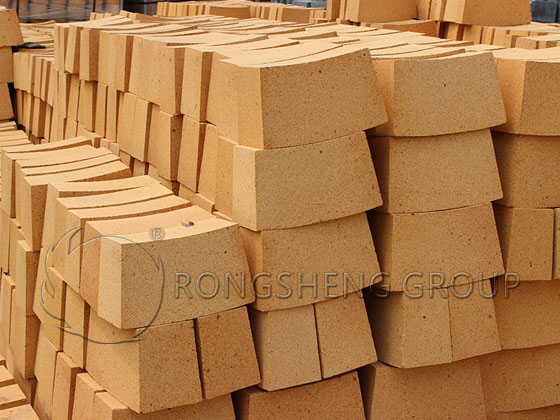
While zirconium-chromium-alumina bricks offer good load-bearing capacity, high strength, wear resistance, and erosion resistance, the brick shape is also crucial in rotary kiln lining applications. The newly designed fan-shaped refractory bricks are a good choice because they better fit the rotary kiln lining, preventing brick detachment and separation during use, thus extending the service life of the rotary kiln lining.
Of course, low-porosity clay bricks used in the transition zone can also be fan-shaped. This ensures a smooth fit within the kiln body and prevents refractory brick detachment from the kiln lining.
However, generally, medical waste rotary kilns have small diameters, so the height of the zirconia-corundum refractory bricks cannot be too high. Excessive height not only affects the kiln diameter but also increases the risk of refractory brick breakage. Therefore, the height of the refractory bricks in a medical waste rotary kiln should not exceed 250mm.
In short, regardless of the refractory brick shape chosen, proper construction is essential. The refractory bricks should have good thermal shock resistance and strong erosion resistance.