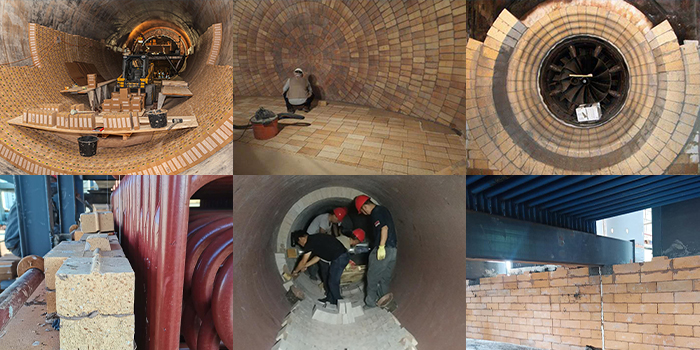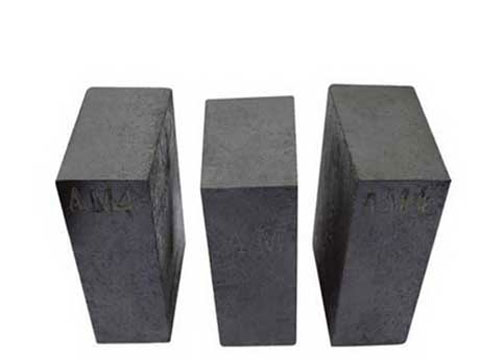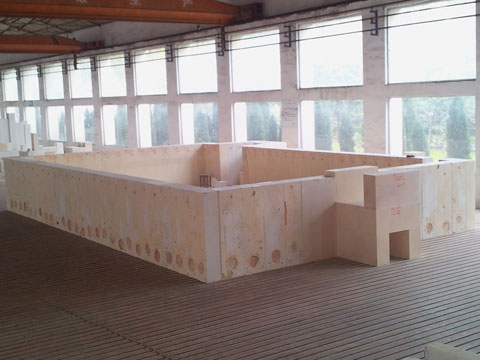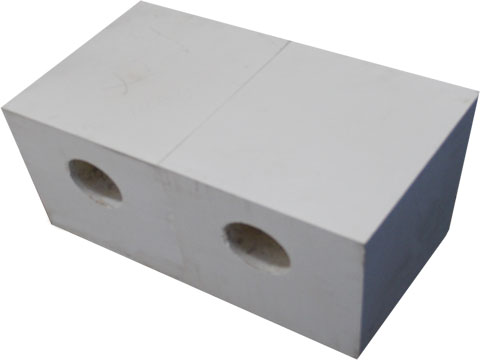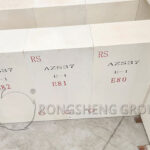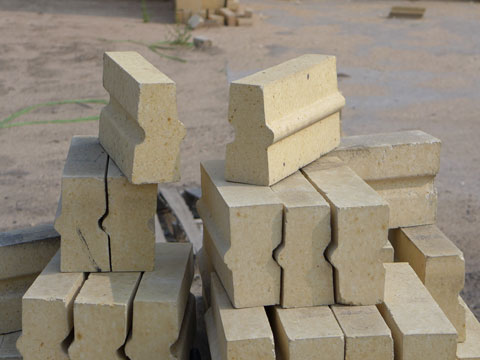
There are significant differences between fused refractory bricks and sintered refractory bricks, including differences in production methods, performance characteristics, application environments, and prices.
The difference lies in the production methods:
Electrominated bricks are manufactured using a liquid-phase reaction. The melt in the electric furnace is entirely liquid; precisely proportioned mixtures are melted in an electric arc furnace. The mixture is then cast into a sand mold. The casting is heat-treated, cooled, and then processed.
Sintered bricks, on the other hand, are manufactured using a solid-phase reaction, composed of bauxite and corundum. Since both exist in granular form, mullite is formed at their interface during firing. The production process involves pressing the mixture into shape using a mixing press, followed by drying. Finally, it is sintered in an oxidizing atmosphere at 1350-1600 degrees Celsius.
Differences in Performance Characteristics
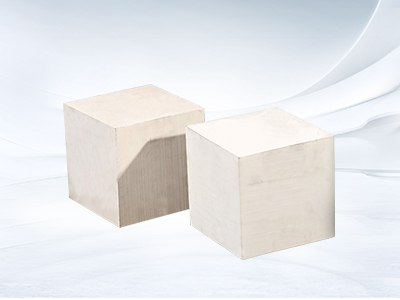
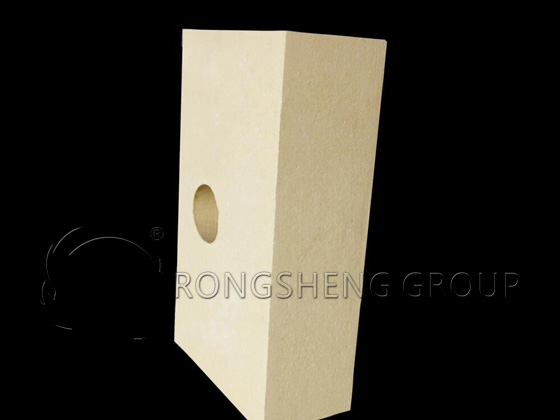
Comparing refractory bricks produced using these two different methods, electrofused bricks exhibit a dense structure, very low porosity, high bulk density, high mechanical strength and high-temperature structural strength, and strong resistance to molten glass erosion. Electrofused refractory brick products mainly include electrofused mullite bricks, electrofused zirconia-corundum bricks, electrofused chromium-zirconia-corundum bricks, electrofused quartz bricks, and electrofused corundum bricks. Sintered refractory bricks are less dense and less resistant to erosion than electrofused refractory bricks. Sintered refractory brick products mainly include clay bricks, high-alumina bricks, corundum bricks, mullite bricks, and composite silicon carbide bricks.
In electrofused bricks, the various chemical components are thoroughly and uniformly mixed at the molecular level in the liquid phase, eventually recrystallizing. The crystals are well-developed, visible to the naked eye, and have closed pores, making them difficult for eroding agents to penetrate. In contrast, sintered refractory bricks have very small crystals, invisible to the naked eye, and have open pores. Even when using raw materials with the same chemical composition, the quality of crystal formation can vary greatly due to differences in their crystal phases. Because the production process is simple, the selection of raw materials is of great importance.
Price Difference
Electrominated bricks have a long production cycle, high power consumption, complex production technology, and are expensive. Sintered refractory bricks, on the other hand, have a short production cycle and are relatively inexpensive.