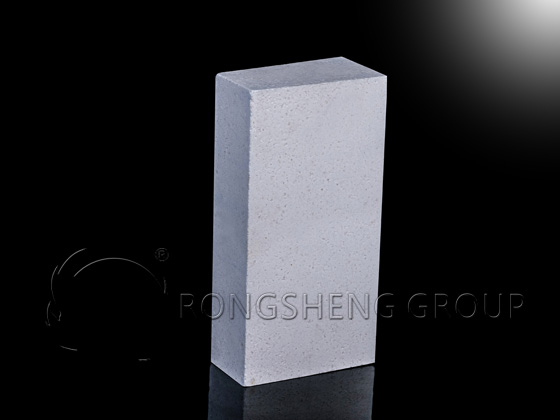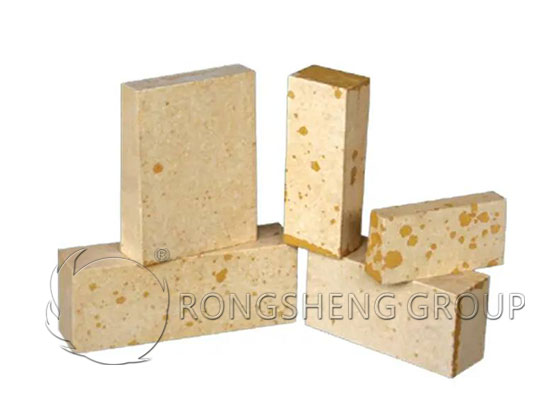
In the selection of refractory materials for powder metallurgy electric furnace linings, there are many types of refractory materials, mainly heavy refractory bricks. These include refractory clay bricks, high-alumina bricks, silica bricks, fused alumina bricks, silicon carbide bricks, and carbonaceous bricks.
Clay Bricks
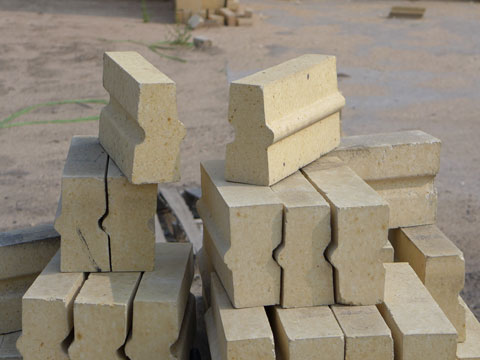
Clay bricks are composed of refractory clay or kaolin (mainly composed of Al2O3, SiO2, and H2O, and containing 6%–7% metal oxides such as K2O, NaO, CaO, MgO, TiO2, Fe2O3, etc.). Clay bricks are products made by mixing soft clay (binder) with sintered clay, molding the mixture, and then sintering it at 1300–1400℃. Clay bricks contain 30%–40% Al2O3, with the remainder being SiO2.
Clay bricks are weakly alkaline refractory materials, resistant to acidic slag corrosion, but with poor resistance to alkaline slag corrosion. They exhibit excellent resistance to rapid heating and cooling. The softening temperature under load is 125–300℃, the refractoriness is 1610–1750℃, and the maximum service temperature is 1300–1400℃. Clay bricks can be used to construct furnace walls, furnace roofs, furnace bottoms, combustion chambers, etc. However, it corrodes Fe-Cr-Al resistance wire and is unsuitable as a support brick for it. Furthermore, it is easily damaged by CO and H2 corrosion in controlled atmospheres.
High-Alumina Bricks
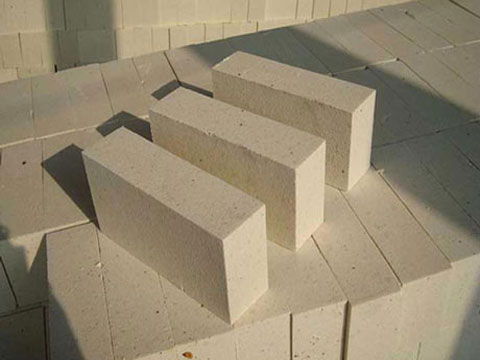
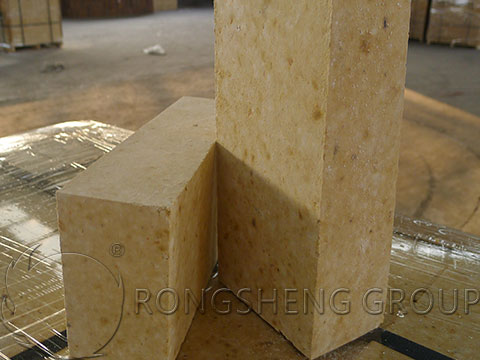
High-alumina bricks refer to refractory materials with an Al2O3 content of over 48%. They are made from high-alumina bauxite (Al2O3·SiO2) and fired at around 1500℃. High-alumina bricks have a refractoriness of 1750~1790℃, a softening temperature under load of 1420~1500℃, and good resistance to chemical corrosion, but poor resistance to rapid heating and cooling. High-alumina bricks generally have significant re-firing shrinkage, which is particularly important for those containing 60%~75% Al2O3. When using high-alumina muffle furnace tubes fired at insufficient temperatures or when using these high-alumina bricks to build furnace roofs, the large re-firing shrinkage can easily cause the roof to sink or collapse after a period of high-temperature use.
Corundum Bricks
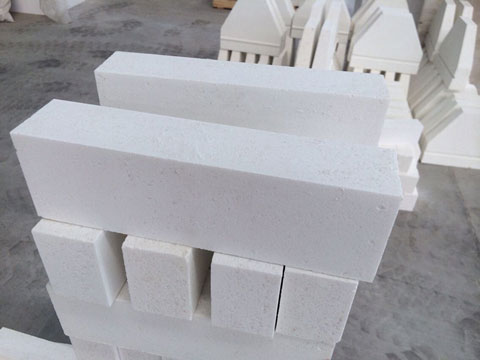
Corundum bricks are high-grade refractory materials with an Al2O3 content greater than 98%. Depending on the raw materials used, corundum bricks are divided into two types: fused alumina bricks and alumina corundum bricks.
Corundum can be natural or synthetic. Synthetic corundum is generally formed by high-temperature calcination of industrial alumina (mainly γ-Al2O3), or it can be made from non-crystalline alumina raw materials through high-temperature electric furnace melting; this is often called fused alumina.
Fused alumina is a refractory product made primarily from fused alumina sand, with the addition of an appropriate amount of aluminum phosphate solution as a binder. Its forming methods include ramming (or machine pressing), molding, and plaster mold casting. Its firing temperature is 1700~1800℃, its refractoriness is 1950℃, and its softening temperature under load is 1770℃. It has a resistance to rapid heating and cooling of 50 cycles, a density of 3.1~3.4 g/cm³, and a service temperature of 1800~1850℃.
Due to its good resistance to rapid heating and cooling, high hardness, and good wear resistance, corundum products can be used as furnace tubes in high-temperature molybdenum wire furnaces. It is worth noting that corundum products require very high firing temperatures. If the firing temperature is too low, re-firing shrinkage is likely to occur during use, reducing wear resistance and worsening resistance to rapid heating and cooling. This is particularly important for horizontal continuous molybdenum wire furnace tubes. Alumina corundum bricks are made by adding appropriate amounts of oxides (titanium oxide, chromium oxide, etc.) to industrial pure alumina powder and firing at temperatures above 1600℃, or by firing pure alumina products with a purity of over 98%. These products have a service temperature of 1750-1850℃ and are generally used in high-temperature kilns, electric furnace linings, and furnace tubes. Technical specifications for alumina corundum bricks.
Silica Bricks
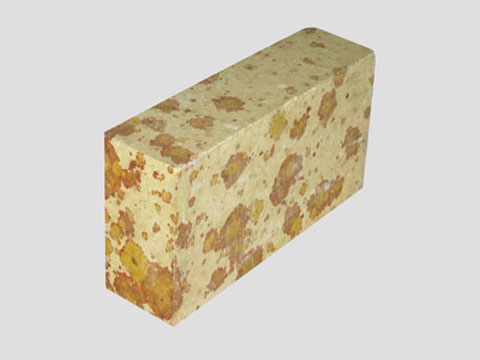
Silica bricks are refractory materials containing more than 93% SiO2, and are made by crushing quartzite and adding lime slurry or other binders.
Silica bricks are acidic refractory materials, with strong resistance to acidic slag but weak resistance to alkaline slag; this should be noted when using them. Silica bricks have a refractoriness of 1710~1730℃, and their softening temperature under load is almost equal to their refractoriness, generally above 1620~1640℃, which is their greatest advantage. Their disadvantage is poor resistance to rapid heating and cooling; they are sometimes used to build high-temperature sections of heating furnaces, but are not suitable for intermittent furnaces.
Magnesia Bricks and Magnesia-Alumina Bricks
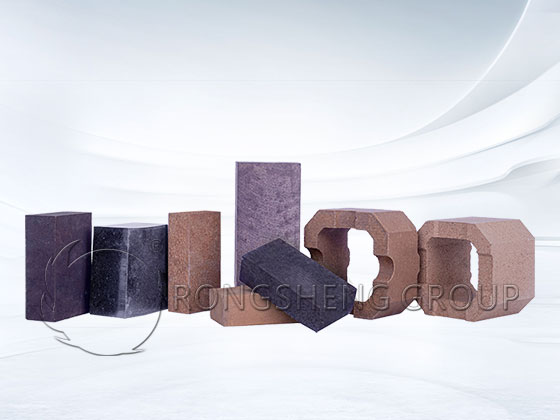
Magnesia bricks are made from calcined magnesite (MgCO3) and contain more than 80% magnesium oxide. Magnesia bricks are alkaline refractory materials with good resistance to alkali corrosion and good resistance to iron oxide corrosion. Their refractoriness reaches up to 2000℃, and their softening temperature under load is 1550~1600℃. Magnesia bricks undergo slight volume shrinkage under prolonged use at high temperatures and have poor resistance to rapid heating and cooling, requiring only 3-5 water cooling cycles. Magnesia bricks are commonly used to construct the furnace bottom of heating furnaces. It should be noted that magnesia bricks are alkaline refractory materials and react to varying degrees with clay bricks, high-alumina bricks, and silica bricks at high temperatures.
Magnesium-alumina bricks are magnesia bricks formulated to improve the thermal stability of magnesia bricks. They are formed by adding 5%-10% Al₂O₃ to the batching, creating a magnesia-alumina spinel (MgO·Al₂O₃) bond. They have a refractoriness of 2135℃, better thermal shock resistance and resistance to rapid heating and cooling than magnesia bricks, and a higher softening temperature under load, making them a high-performance refractory material.
Silicon Carbide Refractory Products
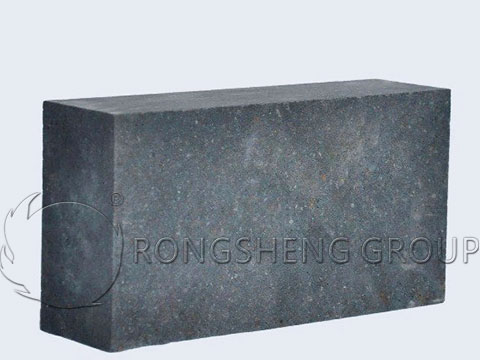
Silicon carbide refractory products are made from silicon carbide as raw material, with or without a binder, molded, and then fired. These products are divided into three categories:
- (1) Products using clay as a binder.
- (2) Products using other mineral binders (ferrosilicon, quartz, etc.).
- (3) Products without a binder (recrystallization).
Properties of silicon carbide products using clay as a binder.
Silicon carbide refractories have high mechanical strength, excellent abrasion resistance, resistance to rapid heating and cooling, thermal conductivity (5-10 times greater than general refractories), and electrical conductivity. They also have a high softening point under load, with a deformation initiation point of approximately 1600℃. Their disadvantages include high price, susceptibility to oxidation at operating temperatures above 1300℃, and susceptibility to corrosion by alkaline slag. The denser the silicon carbide material, the better its oxidation resistance.
Silicon carbide refractories are commonly used as linings for electric furnaces, muffle walls for muffle furnaces, refractory heating plates, and heating elements.
Graphite Refractories
Graphite refractories use graphite as the raw material and soft clay as the binder. They are available in superior, first, second, and third grades, with a refractoriness of 3000℃, a service temperature of 2000℃, and a softening start temperature under load of 1800~1900℃.
Alumina Products
Alumina powder has a melting point of 2015℃. It is very stable in both oxidizing and strongly reducing atmospheres, and can be used in any type of atmosphere below 1900℃.
Pure alumina has several crystalline structures at low temperatures, such as hexagonal (denoted by α), spinel (a mixture of oxides with the chemical formula RO·R₂O₃, denoted by β), and cubic (denoted by γ). However, all these crystalline forms become the high-temperature stable α-Al₂O₃ (corundum) when heated to temperatures above 1600℃; this transformation is irreversible.
Alumina powder can be used as a refractory material and also as a good thermal insulation material at high temperatures below 1900℃. This is why furnace builders often fill the furnace tubes around which heating elements are wrapped with 50-100mm thick layers of Al₂O₃ powder. It is worth noting that if the furnace atmosphere is carbonaceous, carbon particles are more likely to deposit in the alumina powder, which is detrimental to Ni-Cr resistance wires and can even damage them.
Alumina products are commonly used as refractory linings for sintering furnaces, and also as furnace tubes or flame shields for electric furnaces used for winding molybdenum or tungsten wires. They can be used in hydrogen or decomposed ammonia atmospheres. Alumina can also be made into small boats, observation port sleeves, crucibles, etc. Alumina crucibles are used to melt various metals and oxides, exhibiting extremely high chemical stability.