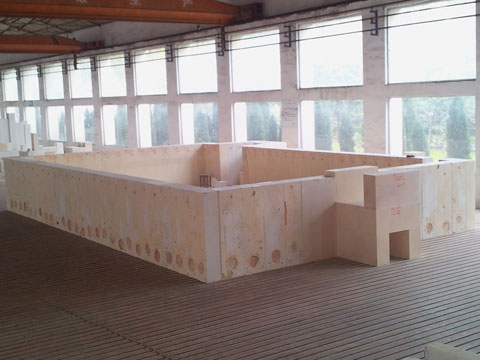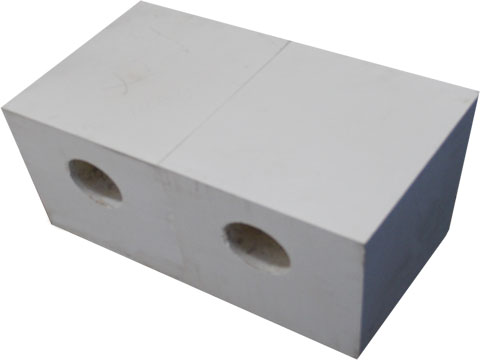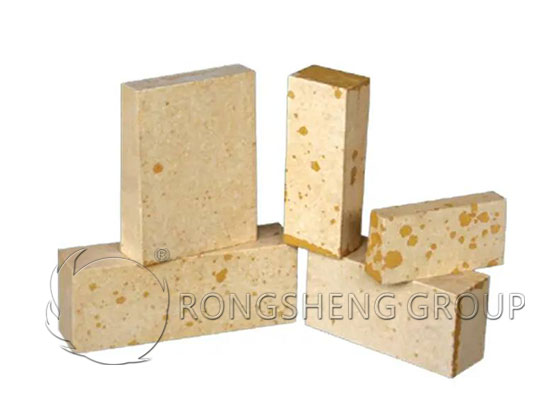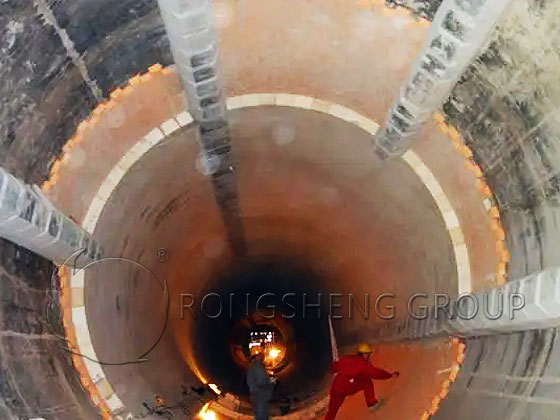
AZS refractory bricks, also known as fused zirconia-corundum bricks, are cast using various methods, including ordinary casting, inclined casting, shrinkage-cavity-free casting, and quasi-shrinkage-cavity-free casting. These different casting methods allow AZS bricks to meet the application requirements of various parts of ceramic frit kilns, sodium silicate kilns, and glass kilns. They are erosion-resistant, corrosion-resistant, and have a long service life.
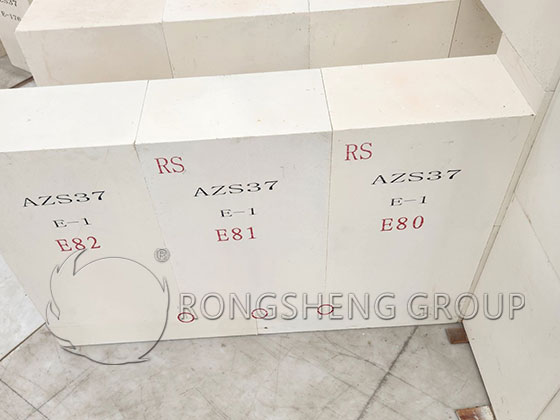
Advantages of Fused Cast Zirconia-Corundum Bricks for Glass Furnaces
On the one hand, fusion casting is less restricted by molds, facilitating the manufacture of large products and reducing erosion at and along brick joints. On the other hand, fused cast materials have very low apparent porosity, making it difficult for molten glass to penetrate into the material’s interior. Therefore, fused cast materials exhibit unparalleled erosion resistance in glass furnace linings compared to ordinary sintered refractories.
Below 1400 ℃, the erosion rates of all fused cast materials are very low. Above 1400 ℃, the order of erosion resistance from strongest to weakest is: Cr₂O₃-Al₂O₃, 41# AZS, 36# AZS, 32# AZS, α-Al₂O₃, α-β-Al₂O₃. Due to the coloring properties of Cr₂O₃, the melting section of the glass furnace is constructed using a combination of 33#, 36#, and 41# fused cast AZS bricks. Typically, 41# fused AZS is used in harsh conditions, 36# fused AZS in moderately corrosive conditions, and 33# fused AZS in relatively mild conditions. The breast wall of the cooling section can be made of β-Al₂O₃ brick, while the pool walls and bottom paving bricks of the cooling section can be made of α-β-Al₂O₃ fused AZS brick. In recent years, due to increasingly demanding glass kiln production conditions, many manufacturers have significantly increased the ZrO₂ content of fused zirconia corundum materials. For example, the ZrO₂ content of 33# AZS has been increased to 34%–35% (w); the ZrO₂ content of 36# AZS has been increased to 37%–39% (w); and the ZrO₂ content of 41# AZS has been increased to 43%–45% (w).
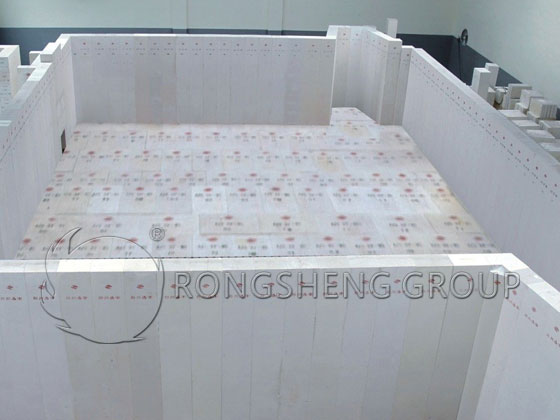
Influence of Phase Composition and Structure on Performance of Fused Cast Zirconia-Corundum Bricks
The main phases of fused cast AZS are primary zircon, aluminum-zirconium eutectic, corundum, and glassy phase. Crystallization process: First, primary zircon crystals precipitate from the primary zircon crystals, then aluminum-zirconium eutectic crystals precipitate along the zircon-corundum line, and finally the glassy phase and corundum precipitate. Image analysis, combined with conventional testing and statistical analysis, was used to determine the relationship between material composition, structure, and performance.
(1) Increasing the content of Na₂O and SiO₂ increases primary zircon, decreases aluminum-zirconium eutectic, and increases the matrix (1.35 × 1.06 – 1.07 > 0). This is because increasing the content of Na₂O and SiO₂ increases the content of the glassy phase, improving its ability to dissolve Al₂O₃.
(2) Primary zircon has little effect on the erosion resistance of fused cast AZS refractories (coefficient is -0.02). On the one hand, the increase in primary zircon leads to an increase in the glassy phase, reducing erosion resistance. On the other hand, primary zircon also restricts the loss of the glassy phase, offsetting some of the adverse effects of increased Na₂O and SiO₂.
(3) Increasing SiO₂ content or decreasing Na₂O content both increase the viscosity of the glassy phase, making it difficult for pores to escape and increasing true porosity.
(4) When heated, the pores can accommodate a certain amount of glassy phase, reducing its exudation. This increases the initial precipitation temperature of the glassy phase.
In fused cast zirconium alumina materials, zirconium oxide enhances erosion resistance. The glassy phase aids melting during melting and relaxes thermal stress and reduces the harmful effects of zirconium oxide phase transformation during cooling. The key to the process of fused cast zirconium alumina refractories is to ensure that primary zircon with appropriate particle size and shape is evenly distributed within the glassy phase of appropriate composition and quantity, allowing the primary zircon and the glassy phase to complement and protect each other. This allows for the production of fused corundum refractory materials with higher zirconium oxide content, lower glass phase content, and a higher manufacturing yield. Therefore, it is necessary to improve the automation level of equipment and optimize the mold-making, melting, casting, and annealing processes.
Application and Changes of Fused Cast Zirconia-Corundum Bricks in Glass Furnaces
Fused cast zirconia-corundum bricks are mainly composed of alumina, zirconium oxide, and silicon dioxide, abbreviated as AZS, representing the first letters of their main components. During production, alumina, zirconium oxide, and silicon dioxide are melted in an electric furnace and then cooled through molding. The petrographic structure consists of a eutectic of corundum and zirconium eccentricity and a glassy phase, with the glassy phase filling the spaces between the crystals. Fused cast zirconia-corundum bricks are widely used in the construction of glass furnaces. Different models have different compositions and can be used in the construction of different parts of the glass furnace. Glass furnaces in use will withstand temperatures of thousands of degrees Celsius. Under such severe conditions, what changes occur in the fused cast zirconia-corundum bricks?
In glass furnaces, fused cast zirconia-corundum material undergoes a crystallization process. First, zirconium precipitates in the zirconium extrusion space. Then, aluminum-zirconium eutectic crystals precipitate along the zirconium-corundum eutectic line. Finally, the glassy phase and remaining crystals precipitate. The glassy phase, as one of the rock phase structures in fused cast zirconia-corundum bricks, serves two purposes: firstly, it lowers the melting temperature, expands the casting temperature range, and relaxes thermal stress. However, it is also a weak point in fused cast zirconia-corundum bricks, reducing the material’s resistance to erosion.
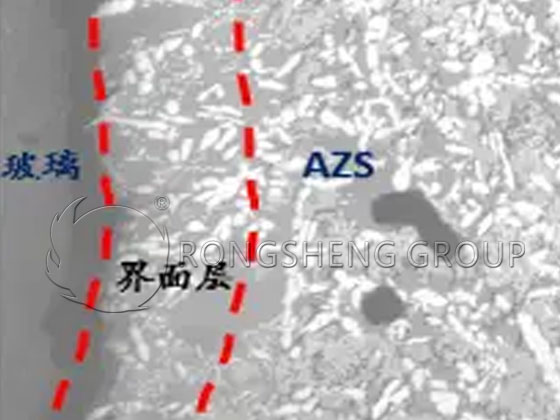
In glass furnaces, fused cast zirconia-corundum bricks are gradually eroded. The glassy phase is first replaced by the furnace glass, and the corundum begins to dissolve, slowing the erosion rate. After the corundum is completely consumed, the fused refractory material begins to disintegrate, and zircon enters the furnace, forming stones. If the refractory components are not evenly mixed after dissolution, streaks will form. The streaks, with components different from the glass, can affect the solubility of gases, causing bubbles to precipitate, which will adversely affect the quality of the produced glass. Stones and streaks also affect the quality of the glass.
With the promotion of oxy-fuel combustion technology, the concentration of alkaline vapors in the flame space of glass furnaces has increased significantly, severely eroding the refractory material in the upper space of the furnace. The eroded refractory material enters the molten glass in the furnace, producing stones, streaks, and bubbles, affecting the quality of the glass. Therefore, some manufacturers have developed low-exudation castable refractory materials.