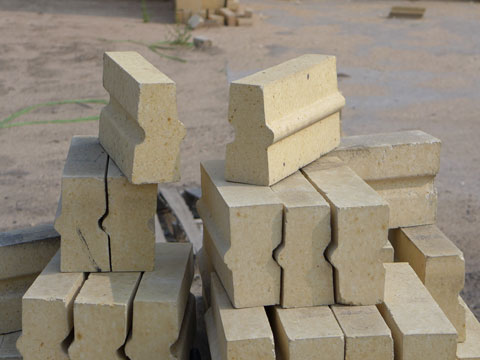
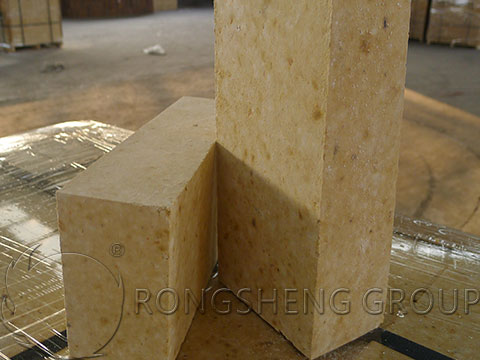
The performance of silica bricks for coke ovens is determined by their microstructure, which imparts excellent high-temperature properties. Regarding the crystalline transformation of silica, the material exhibits different crystal structures at varying temperatures; thus, the production process essentially involves the transformation of quartz into tridymite and cristobalite under prolonged high-temperature exposure. The lower the residual quartz content—indicating a more complete transformation—the greater the structural stability of the product at high temperatures.
Silica Bricks for Coke Ovens
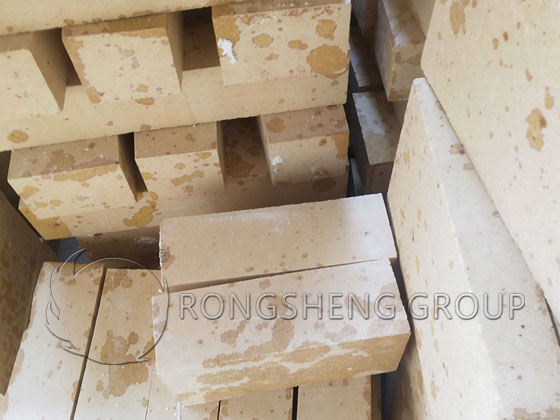
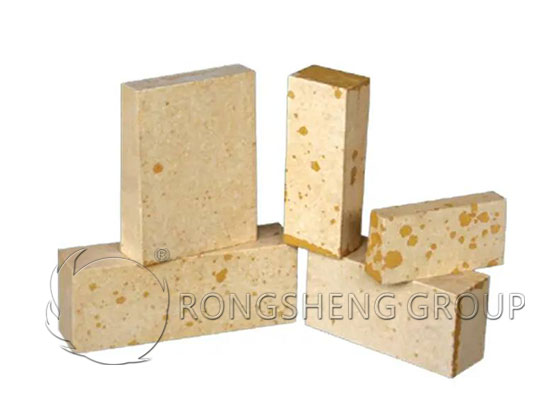
Silica bricks for coke ovens contain tridymite and cristobalite, both of which exhibit excellent high-temperature properties. Under a microscope, the tridymite phase displays a spearhead-like twinned structure; this phase is a key component responsible for the bricks’ high load-bearing softening temperature and low creep characteristics. Typically, these bricks contain 60–65% tridymite and 15–20% cristobalite. The polymorphic transformation process of silica is highly complex. Achieving complete conversion into tridymite and cristobalite during production requires careful consideration of numerous factors, including the chemical composition, crystal size, and transformation characteristics of the silica raw material; the type and dosage of mineralizers; the maximum firing temperature; the heating rate; the soaking time; and the cooling rate. Among these, the type of mineralizer, the maximum firing temperature, and the soaking time are particularly critical. At the peak temperature (usually 1450°C), a longer soaking time (e.g., 48 hours) results in more complete quartz transformation and larger crystal development, thereby enhancing the brick’s performance.
Silica Bricks with Strong Corrosion Resistance to Acid Slag
Thermal Expansion Curve of Coke Oven Silica Bricks
The linear thermal expansion of coke oven silica bricks is 1.27% at 1000°C; consequently, relatively wide mortar joints are used during masonry construction to accommodate this expansion. Nevertheless, many coke oven bricks continue to expand during service. The primary factors affecting brick quality include:
① The presence of incompletely transformed residual quartz.
② A tridymite content of less than 50%.
Additionally, bricks made from fine-grained or cryptocrystalline silica exhibit lower thermal expansion than those made from coarse-grained crystalline silica. “Zero-expansion” silica bricks, produced using fused quartz as the raw material, have a thermal expansion coefficient close to zero.
The quality of silica bricks is determined by the level of control over the firing process
Silica brick manufacturers must place great importance on the formulation and management of firing schedules.
(1) A firing process involving high temperatures and prolonged soaking is essential to produce bricks with good sintering characteristics and a residual quartz content of less than 0.5%. Necessary firing conditions include a peak temperature of 1450°C and a soaking time of at least 48 hours. High firing temperatures and long soaking times are prerequisites for ensuring the complete transformation of quartz into cristobalite and tridymite.
(2) A stable kiln car pushing schedule is a crucial measure for temperature control in tunnel kilns. Factories sometimes overlook the importance of this schedule when adjusting production output, arbitrarily altering the pushing intervals. Disrupting the firing schedule prevents strict control over the degree of quartz transformation; significant fluctuations in residual quartz content are a primary cause of abnormal expansion in the kiln.
(3) Managing and controlling the loading method and the load per kiln car are guarantees for achieving uniform heating of the silica bricks.
The movement of kiln cars through the tunnel kiln involves a linear heat exchange process for the products. The greater the load on the kiln car, the more heat the products must absorb. The residence time of the kiln car within the kiln is designed to ensure uniform heating of the products. Under a specific pushing schedule, the load on the kiln car determines whether the products can be heated evenly. Beyond ensuring safe movement through the tunnel kiln, the loading method is primarily designed to ensure each brick is heated uniformly and receives sufficient energy for complete transformation. Precise calculation of the heat absorption per car—along with the provision of adequate flues, fire channels, and gaps for heat transfer—ensures uniform heating of the products.
Before purchasing silica bricks, it is necessary to understand the manufacturer’s firing equipment, firing temperature profiles, pushing schedules, and kiln car residence times, and to allow the supplier sufficient time to meet these firing process requirements. Generally, the firing cycle for silica bricks takes eight days; rushing to stock up should not be allowed to interfere with the manufacturer’s established firing temperature profiles and pushing schedules. Selecting high-quality raw materials, along with employing a stable kiln-car schedule and a high-temperature, long-duration soaking process during firing, are essential measures for producing high-quality silica bricks. The selection of high-quality silica bricks is a key factor in ensuring the long service life of coke ovens.
New Silica Bricks for Coke Oven Maintenance: Replacing Standard Silica Bricks with Zero-Expansion Silica Bricks for Hot Repairs
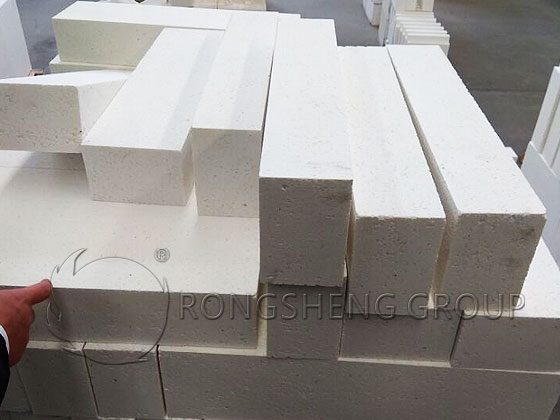
Currently, zero-expansion silica bricks—a new type of brick made from fused silica—are widely used in domestic and international refractory markets, yielding excellent results. However, the thermodynamic properties of fused silica reveal that, as an unstable, high-energy glassy material, it is prone to devitrification (crystallization of the glassy SiO2 phase) when subjected to continuous high-temperature operation (above 1100°C) or repeated thermal cycling (between room temperature and 1100°C). This process transforms the material into cristobalite, which has a higher coefficient of thermal expansion; consequently, the internal structure of the fused silica product loosens, leading to expansion and cracking. Zero-expansion silica bricks from Rongsheng Refractories feature slow crystallization rates, high refractoriness under load, and low creep, thereby significantly extending the service life of coke ovens.
Required Characteristics of Zero-Expansion Silica Bricks for Hot Repairs
Chemical properties of zero-expansion silica bricks: The use of high-purity raw materials is essential to delay the crystallization of fused silica. Low-grade raw materials contain low-melting-point impurities that accelerate the crystallization process during use; once crystallization begins, the product undergoes creep deformation and damage due to shrinkage. Zero-expansion silica bricks are manufactured using high-purity fused silica and a calcium-free process, resulting in a high-purity chemical composition with an SiO2 content exceeding 99%, ensuring safe and reliable long-term performance at high temperatures. High-purity raw materials are key to delaying fused silica crystallization; conversely, low-purity materials contain impurities that accelerate crystallization, leading to shrinkage-induced creep deformation and inevitable failure. High Refractoriness-under-Load and Low-Creep Properties of Zero-Expansion Silica Bricks
Zero-expansion silica bricks must maintain a refractoriness-under-load temperature exceeding 1650°C; as the height of carbonization chambers increases, refractoriness-under-load and creep resistance have become the most critical performance indicators for coke ovens. Only products capable of long-term stability at high temperatures can ensure a service life of over 10 years for repaired oven walls. The creep rate is 0.04% after 25 hours at 1450°C.
Excellent Thermal Stability of Zero-Expansion Silica Bricks
Hot repair operations require refractory materials to be introduced directly into high-temperature environments; therefore, the products must possess excellent thermal stability—resisting spalling or cracking—to enable rapid hot repair.
High-Temperature Mechanical Properties of Zero-Expansion Silica Bricks
Test results for the flexural strength of silica-based products show a high-temperature flexural strength of 25 MPa (at 1200°C for 0.5 hours) and a room-temperature flexural strength of 11 MPa.
Zero-expansion silica bricks with high refractoriness under load and low creep characteristics are produced by effectively controlling the crystallization of amorphous SiO₂. As previously mentioned, amorphous fused silica offers high purity and excellent resistance to alkali erosion; however, it is prone to crystallization during prolonged high-temperature exposure. The transformation from amorphous to crystalline silica-oxygen tetrahedra is accompanied by shrinkage and deformation. Consequently, quartz-based products typically exhibit low refractoriness under load, generally ranging from 1300°C to 1400°C. Therefore, manufacturers focus on controlling reaction sintering and crystallization transformation during the production of zero-expansion silica bricks.
On one hand, this effectively prevents the crystallization of amorphous SiO₂, allowing the product to retain the low thermal expansion and superior thermal shock resistance characteristic of amorphous silica.
On the other hand, it imparts high refractoriness under load and low creep properties to the product.
The refractoriness under load for zero-expansion silica bricks is significantly higher, reaching 1680°C—matching the standard for conventional silica bricks.
Forming Methods for Special-Shaped Products
Typically, machine-pressed refractory products can reach a maximum length of 800 mm, with features such as grooves, notches, and regular holes formed directly during the pressing of the brick body. For products that are excessively long, irregularly shaped, or unsuitable for mass production due to small order quantities, a casting method is employed. This allows for the embedding of stainless steel suspension components according to design specifications prior to casting, resulting in a high-performance fired product. Thus, zero-expansion silica bricks can be manufactured in required special shapes while effectively controlling reaction sintering and crystallization, ensuring stable product quality and safe, reliable long-term use.